|
| |
ADVANCING ENERGY-EFFICIENT BUILDINGS: TERI LAUNCHES KNOWLEDGE PORTAL ON ADVANCED BUILDING MATERIALS |
|
|
|
|
|
| |
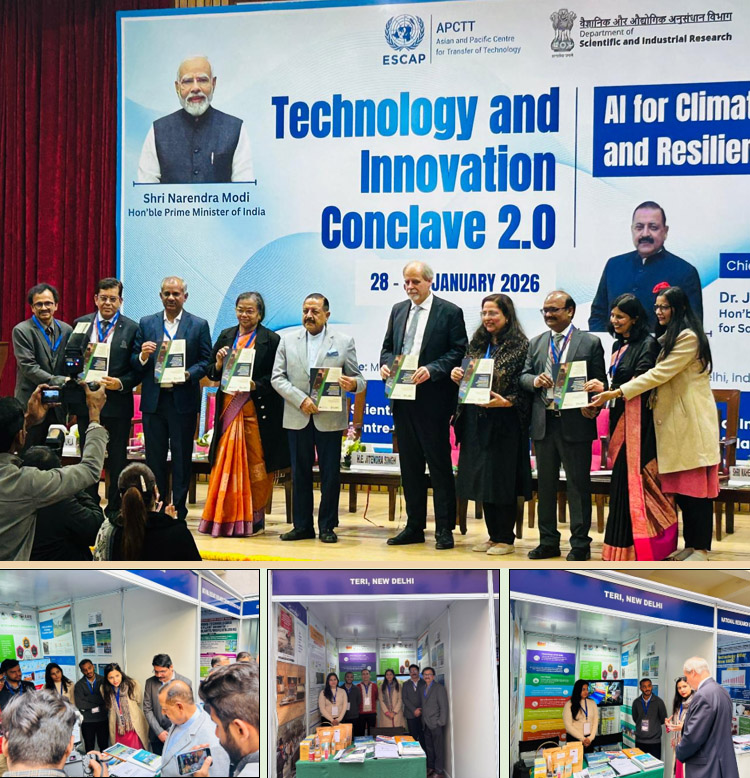
In a significant step toward supporting India’s Net-Zero 2070 goals, The Energy and Resources Institute (TERI) officially launched its report and digital portal, “Enabling Access to Knowledge on Advanced Building Materials and Design Towards Energy-Efficient Buildings,” during the Technology and Innovation Conclave 2.0.
The launch took place at Prithvi Bhavan, Ministry of Earth Sciences, under the conclave theme “AI for Climate Action and Resilience.” The portal was inaugurated by Jitendra Singh, Hon’ble Minister of State (Independent Charge) for Science & Technology and Earth Sciences.
The event brought together a distinguished panel of global and national leaders, including N Kalaiselvi, Secretary, DSIR & Director General, Council of Scientific and Industrial Research; Stefan Priesner, UN Resident Coordinator, India; Preeti Soni, Head, Asian and Pacific Centre for Transfer of Technology; and M Ravichandran, Secretary, Ministry of Earth Sciences.
Developed under the A2K+ programme of the Department of Scientific and Industrial Research, the Energy Smart Materials web portal serves as a centralized digital repository. It is designed to bridge the gap between scientific innovation and practical application in the construction sector by providing accessible knowledge on advanced building materials, design strategies, and energy-efficient technologies.
This initiative aims to strengthen the knowledge ecosystem for sustainable construction and provide the essential data infrastructure needed to transform India’s building stock into energy-efficient and climate-resilient assets, supporting the country’s transition toward a low-carbon future.
Explore the portal: https://lnkd.in/gwkA-6dt
|
|
|
|
| |
ADVANCING GREEN CERTIFICATION FOR SELF-BUILT AFFORDABLE HOUSING |
|
|
|
|
|
|
| |
|
The Energy and Resources Institute (TERI), in collaboration with the Asian Development Bank, is implementing the ADB Self-Built Project focused on developing a green certification framework for self-constructed affordable homes in India, particularly for Economically Weaker Sections (EWS) and Low-Income Group (LIG) households.
The initiative aims to promote sustainability within the informal and self-built housing sector by introducing a practical and accessible assessment framework that evaluates key parameters such as energy performance, water use, carbon emissions, and Global Warming Potential (GWP) of construction materials and practices. By doing so, the project seeks to encourage the adoption of resource-efficient and climate-responsive housing solutions at scale.
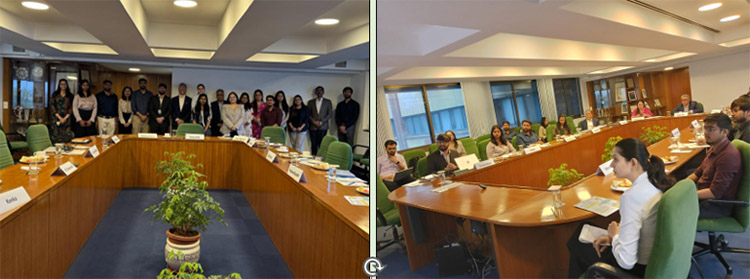
As part of the project activities, TERI convened a stakeholder consultation on 23 March 2026, bringing together representatives from housing finance companies, rating agencies, and sector experts. The consultation focused on discussing implementation pathways, certification methodologies, and potential strategies for scaling green affordable housing across India.
The discussions also highlighted opportunities for collaboration among financial institutions, technical agencies, and policymakers to support the mainstreaming of sustainable practices in self-built housing, which represents a significant share of India’s residential development.
|
|
| |
| |
SITE VISIT TO KRISALA HIRANANDANI TOWNSHIP, PUNE |
|
|
|
|
|
| |
|
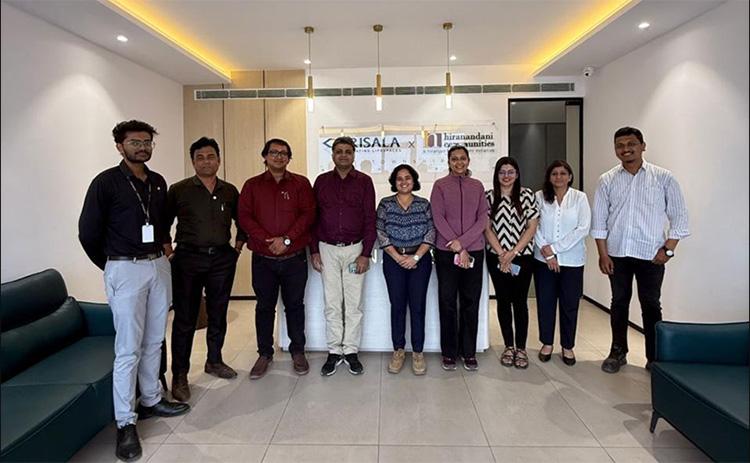
As part of its ongoing work on sustainable and liveable built environments, the Sustainable Buildings Division of The Energy and Resources Institute (TERI) conducted a site visit to Krisala Hiranandani Township. The township project aims to integrate high environmental and liveability standards while serving as a model for sustainable urban development in Pune.
Spanning 107 acres, the township is being developed to accommodate approximately 68,000 residents across around 10,000 tenements. The project emphasizes leveraging the site’s natural surroundings to promote healthier, eco-friendly living and improved quality of life for future residents.
During the visit, TERI’s team assessed various aspects of the project’s design and construction practices, with a particular focus on liveability parameters and the maintenance of Air Quality Index (AQI) levels during the construction phase. The review examined how environmental considerations are being integrated into planning, construction management, and site operations.
The visit concluded with a constructive discussion between the project stakeholders and TERI experts on the need to standardize liveability indicators and air quality monitoring frameworks for large construction sites and township developments. Such measures can help strengthen environmental performance, ensure healthier construction environments, and support the development of more sustainable urban communities.
|
|
| |
| |
LAUNCH OF GRIHA INFRASTRUCTURE RATING FOR LOGISTICS PARKS AND WAREHOUSES |
|
|
|
|
|
| |
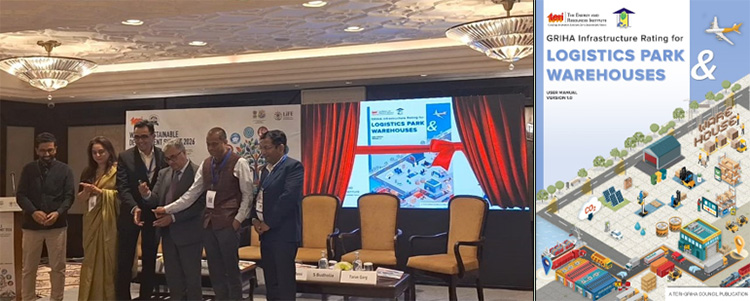
During the plenary session on “Green and Resilient Built Environment for Viksit Bharat – Opportunities and Challenges” on the second day of World Sustainable Development Summit, 26 February 2026, marked the launch of the new GRIHA rating variant “GRIHA Infrastructure Rating for Logistics Parks and Warehouses.”
The rating manual developed by the Sustainable Buildings Division, TERI, aims to advance sustainability benchmarks for the rapidly expanding logistics and warehousing infrastructure sector. The framework promotes sustainable, resource-efficient, and climate-responsive infrastructure while also addressing key aspects of logistics and supply chains: governance, freight efficiency, resource efficiency, and social & well-being along with carbon assessments.
This initiative reinforces our continued commitment to enabling sustainable infrastructure and climate-responsive development across emerging sectors.
|
|
| |
| |
STRENGTHENING ECSBC IMPLEMENTATION IN MADHYA PRADESH |
|
|
|
|
|
| |
The ECSBC Cell in Madhya Pradesh is envisioned as a dedicated nodal unit to provide comprehensive technical support for the implementation and enforcement of the Energy Conservation and Sustainable Building Code (ECSBC) and Eco-Niwas Samhita (ENS) for residential buildings across the state. This initiative aims to strengthen energy efficiency practices in the building sector and support the transition toward sustainable construction.
The Energy and Resources Institute (TERI) is supporting the state through technical assistance focused on ECBC and ENS implementation and enforcement, demonstration projects, and capacity-building and outreach initiatives. These efforts are designed to enhance the understanding and adoption of energy-efficient building practices among key stakeholders involved in the planning, design, and approval of buildings.
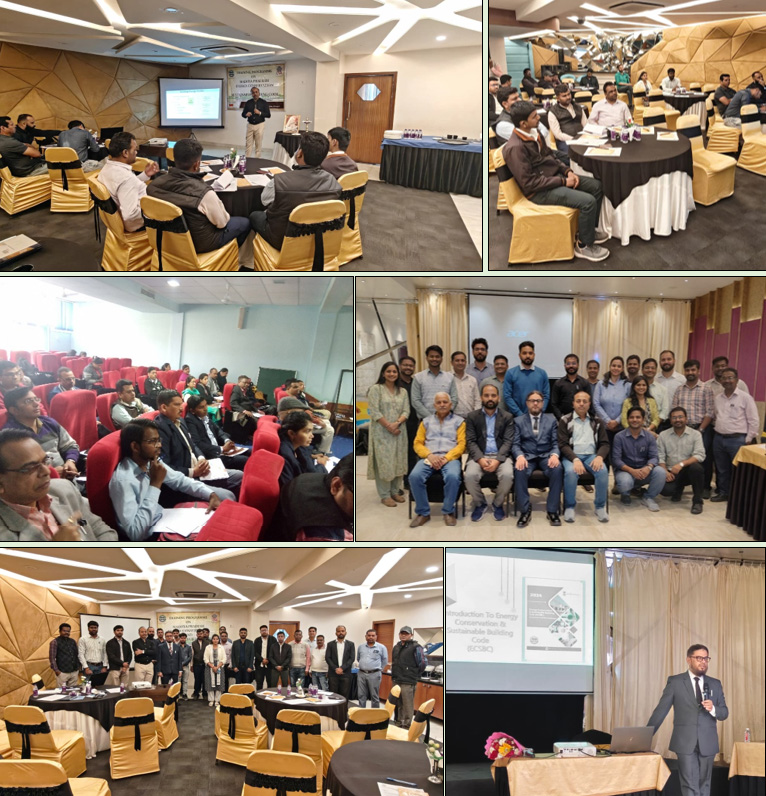
During this quarter, TERI conducted four training programmes in Chhindwara, Katni, Jabalpur, and Bhopal. The programmes saw participation from over 140 professionals, including architects, engineers, municipal officials, and developers.
These training sessions focused on improving awareness and technical understanding of ECSBC and ENS provisions, strengthening local capacity for compliance and enforcement, and promoting the adoption of energy-efficient building practices across urban development projects in Madhya Pradesh.
|
|
| |
| |
STRENGTHENING ECSBC IMPLEMENTATION IN CHANDIGARH |
|
|
|
|
|
| |
During the last quarter, the ECSBC Cell in Chandigarh undertook several key capacity-building and institutional initiatives to advance the implementation of energy conservation and sustainable building practices.
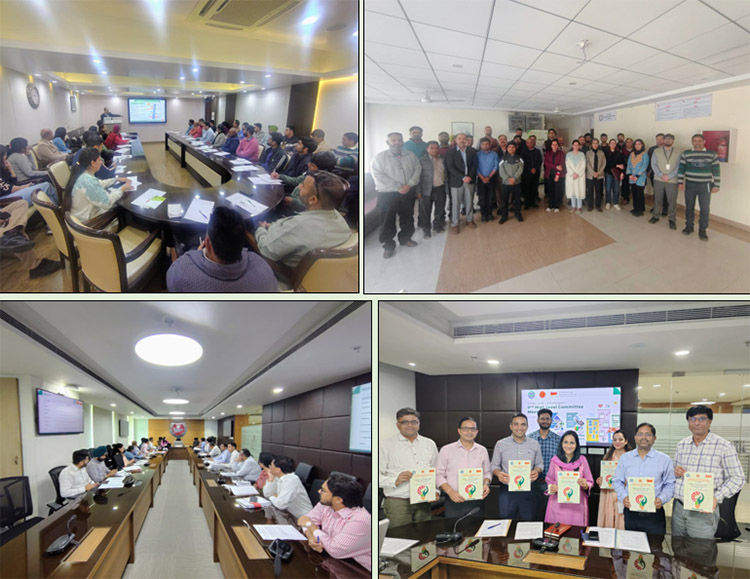
Two half-day awareness workshops were successfully conducted on 11th and 12th February 2026, engaging a wide range of stakeholders involved in building design, approvals, and urban development. The sessions focused on strengthening understanding of Energy Conservation and Sustainable Building Code (ECSBC) provisions, compliance requirements, and practical strategies for implementation. The workshops saw active participation and constructive discussions among attendees.
Subsequently, the 2nd High-Level Committee (HLC) Meeting was convened on 6th March 2026. The meeting reviewed the progress made by the ECSBC Cell, discussed key implementation challenges, and deliberated on strategic actions to strengthen compliance and enforcement mechanisms.
Overall, the quarter marked steady progress in stakeholder sensitization, capacity building, and institutional coordination, laying a stronger foundation for effective ECSBC implementation in Chandigarh.
|
|
| |
| |
ADVANCING BUILDING MATERIAL TESTING AT THE MAHINDRA TERI CENTRE OF EXCELLENCE |
|
|
|
|
|
| |
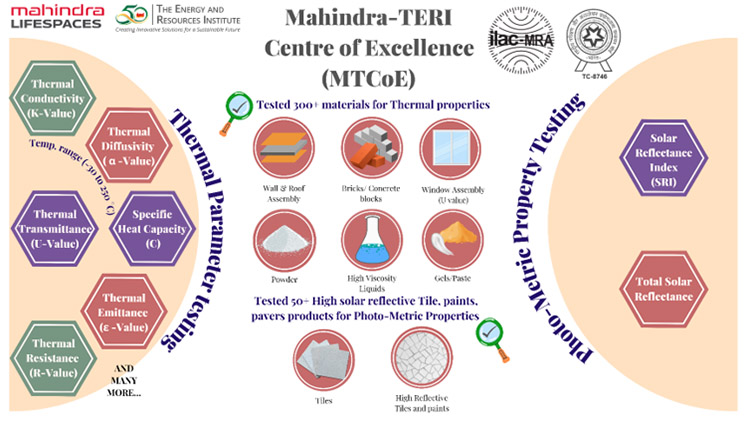
The Mahindra TERI Centre of Excellence continues to strengthen its capabilities in evaluating the performance of building materials that support energy-efficient and sustainable construction practices.
To date, the facility has tested over 60 samples for U-Value, more than 30 samples for Visible Light Transmittance (VLT) and Solar Reflectance Index (SRI), and over 250 samples for K-Value. These assessments play a critical role in understanding the thermal and optical properties of materials used in buildings, which directly influence energy performance and occupant comfort.
Through its advanced testing infrastructure and technical expertise, the Centre is contributing to the development and adoption of high-performance building materials, supporting architects, developers, and manufacturers in making informed decisions that align with energy efficiency standards and sustainable building practices.
This growing body of testing and analysis reflects the Centre’s ongoing commitment to strengthening India’s ecosystem for energy-efficient buildings and climate-responsive construction solutions.
Link: https://mahindratericoe.com/
|
|
|
 |
|
Sustainable Buildings, TERI
Core 1B, Third Floor
India Habitat Centre, Lodhi Road
New Delhi - 110003
Email: sbmail@teri.res.in
Tel: 011-24339606, 011-46444500
|
 |
|
|
|
|