


News, Views, and Updates from TERI


Dear Reader,
March has arrived with a renewed sense of purpose at TERI, following a whirlwind of progress and landmark achievements throughout the start of the year. While the previous month with the Silver Jubilee Edition of the World Sustainable Development Summit set a high bar for impact, we are keeping that momentum alive by deep-diving into our core mission: pioneering research and actionable solutions for sustainable development.
RECAP4NDC Planning Workshop 2026
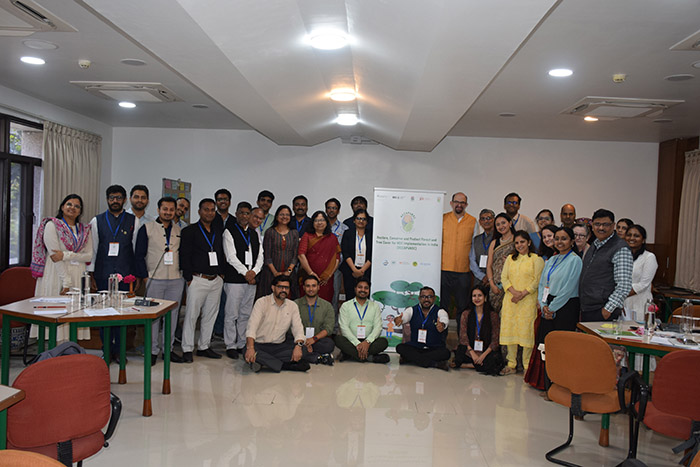
The RECAP4NDC Planning Workshop 2026 successfully concluded at TERI Gram, running from March 16–18. This critical three-day event brought together project partners and key stakeholders for the project commissioned by the German Federal Ministry for the Environment, Climate Action, Nature Conservation and Nuclear Safety (BMUKN) and implemented by a consortium led by GIZ, alongside IUCN, TERI, Forest Survey of India, ICFRE and ICIMOD.
Know MoreTERI Backs Electric Mobility Push at Naroda GIDC as Industries Association Deploys EVs for Estate Services
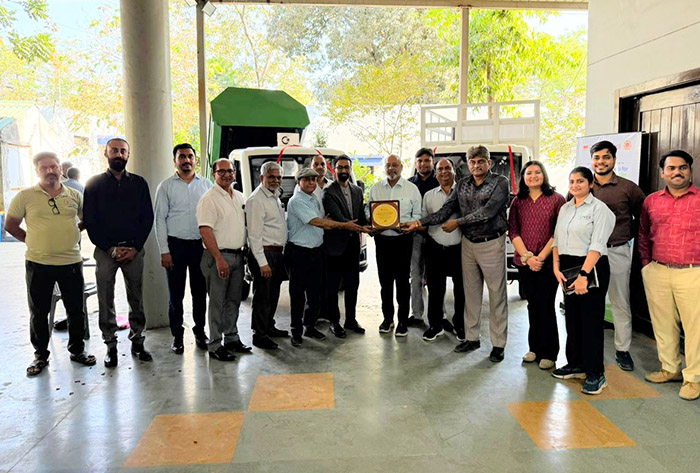
TERI, as part of the Decarbonization Challenge Fund of the Small Industries Development Bank of India (SIDBI), undertook a detailed study to explore pathways for sustainable and efficient transport in Naroda GIDC, Ahmedabad. The project examined existing transport patterns and challenges within the industrial estate and proposed practical solutions for industries, government departments, and the industrial association. These included electrification of vehicles, improved traffic management, strengthening public transport connectivity, and the development of dedicated parking and EV charging infrastructure.
Know MoreCLIMATE INNOVATORS CHALLENGE FOR YOUTH (CLICY)
INNOVATION BOOTCAMP
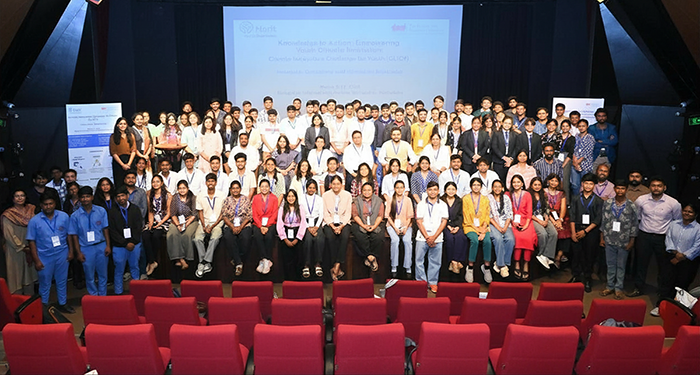
Launched on March 9, 2026, in Bengaluru, TERI and HCLFoundation’s Climate Innovators Challenge for Youth (CLICY) began with a three-day bootcamp for 105 students. Featuring the launch of a digital portal and the ‘Voice of Earth’ street play, the initiative empowers youth through interdisciplinary innovation.
Know More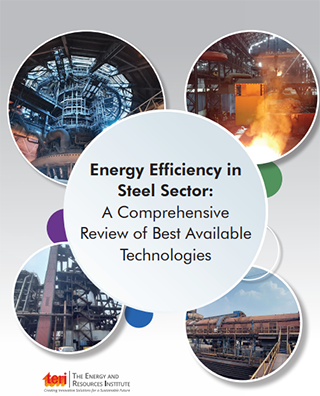
Energy Efficiency in Steel Sector: A Comprehensive Review of Best Available Technologies
Building on TERI’s long-standing work on industrial decarbonisation and resource efficiency, this publication evaluates the potential of (BATs) to enhance plant-level performance—highlighting how wider adoption could, in aggregate, enable up to a twofold improvement in energy efficiency across major production routes. The report assesses capital costs, payback periods, and quantified energy savings for BAT options across BF–BOF, DRI–EAF/IF, and downstream processing routes.
Know MoreHow Decision Architecture Drives ESG Success: Teri Survey Insights from Arupendra Nath Mullick
By focusing on decision architecture rather than outcomes, the survey methodology informs execution-oriented dialogue among policymakers, investors and corporate leaders on translating commitments into measurable progress writes Mr Arupendra Nath Mullick, Associate Director, TERI, for Outlook Business.
Know More
Building India’s climate resilience with water at the core
Guided by the Belém indicators, India can set an example for the Global South by making water systems resilient, co-authored by Dr Syamal Kumar Sarkar, Senior Advisor, TERI for The Hindu.
Know More
A war lesson: The road to energy security runs on electricity
The key lesson of the present trauma is that we should give up thinking of gas as an intermediate fuel and accelerate our transition away from oil and gas, write Mr Ajay Shankar, Distinguished Fellow and Ms Arpita Elisheba Victor, Research Associate, Electricity and Renewables Division, TERI for The Indian Express.
Know More
Energy Security in Conflict: Why Nuclear & Renewables Matter
Despite being one of the world’s largest coal producers, India still imports large volumes to meet demand—leaving the economy exposed to global energy shocks, higher subsidies, forex pressure, and macroeconomic instability. This makes renewable energy strategically critical writes Ms Shiren Pandita, Associate Fellow, TERI.
Critical Minerals and Circular Economy: Why Recycling Must Power India’s Clean Tech Future

India’s clean energy transition depends not only on renewable expansion but also on securing critical minerals like lithium, cobalt, and nickel. Recycling these materials from e-waste and batteries can reduce import dependence and build a resilient, self-reliant supply chain for the future, write Ms Shweta Gautam and Ms Priya S Wali for the TERI Web Desk.
View AllThe Earth Pod
The Earth Pod steers conversations on issues related to climate change, energy transitions, and environment friendly growth.
T25 Years of WSDS
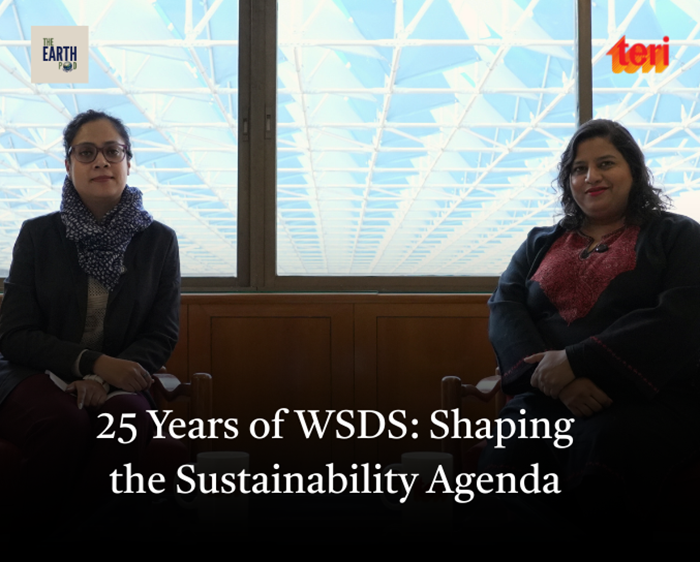
As TERI celebrates the 25th edition (Silver Jubilee) of the World Sustainable Development Summit (WSDS), The Earth Pod brings you a reflective and forward-looking conversation with Dr Shailly Kedia, Director, TERI and Curator, WSDS. From its origins in 2001 as the Delhi Sustainable Development Summit to becoming a globally recognized platform of the Global South, WSDS has played a pivotal role in shaping sustainability norms, influencing policy, and catalysing action.
Watch HereTAKE 3
Take 3 is a short video featuring in-house experts who answer three pertinent questions on current issues.
The Gender of Water: Leading the Way this World Water Day
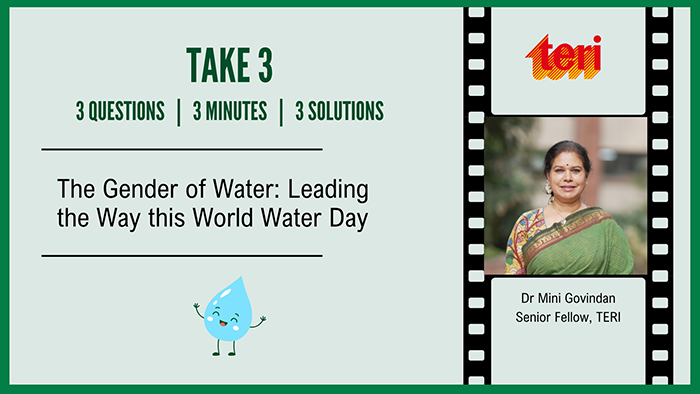
Reflecting on #WorldWaterDay2026, we’re diving deeper into why the water crisis is not gender neutral. In our latest TAKE 3, Dr Mini Govindan, Senior Fellow at TERI, breaks down this year’s UN theme, 'Water and Gender'. From the 200 million hours women spend daily collecting water to the vital need for women in water governance—this conversation matters every day of the year. Watch the full video below.
Watch HereTAKE 3: The Rare Earth Equation: Decoding the Mineral-Energy Link
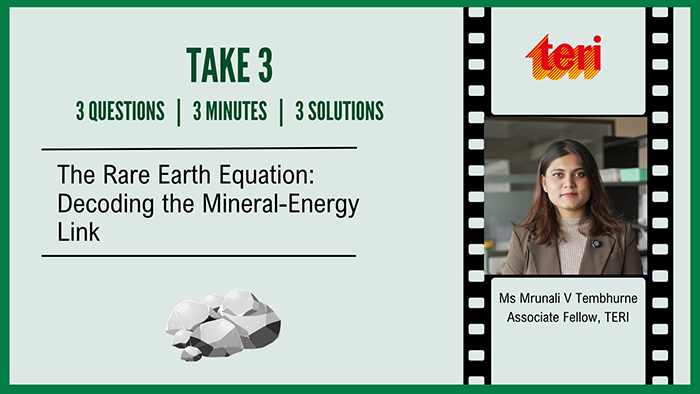
The shift to renewable energy is non-negotiable, but it is also mineral-heavy. In this edition of TAKE 3, Ms Mrunali V Tembhurne, Associate Fellow, TERI, explores the vital link between raw materials and energy transition. She discusses the strategic importance of India’s mineral supply chains and the role of Rare Earth Corridors in securing our 2070 Net-Zero goals.
Watch HereResponsible RE Summit 2026
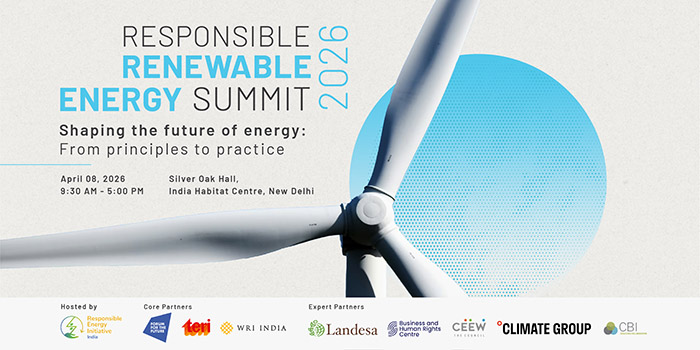
The Responsible Renewable Energy Summit 2026 is a cross-sector forum focused on bridging the gap between ambition and responsible execution in India’s renewable energy transition. Convened by the Responsible Energy Initiative (REI) – India, this year’s theme, “Shaping the Future of Energy: From Principles to Practice,” will bring together key stakeholders to explore how responsible renewable energy can be implemented across projects, supply chains, and regions.
Register HereTERI (The Energy and Resources Institute)
Darbari Seth Block, Core 6C, India Habitat Centre, Lodhi Road,
New Delhi - 110 003, INDIA
Tel. : (+91 11) 2468 2100, 7110 2100
E-mail : mailbox@teri.res.in