


News, Views, and Updates from TERI


Dear Reader,
The new year set a high-octane tone for The Energy and Resources Institute (TERI). We spent the opening month of 2026 translating ambitious climate pledges into tangible action, solidifying our role as a bridge between policy and practice. From conducting the Maritime INDIA @ Net Zero workshop to launching the ‘India’s PV Manufacturing’ report and convening a National Workshop on Clean Air Zones, it has been a truly impactful start to the year.
Preparations are also well underway for our flagship event World Sustainable Development Summit 2026. This year marks our Silver Jubilee, and we look forward to kicking off in late February.
World Sustainable Development Summit 2026
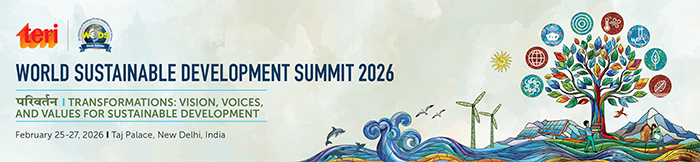
Join us for the World Sustainable Development Summit (WSDS) 2026 – Silver Jubilee Edition of TERI’s annual flagship event on sustainability and climate action. February 25–27, 2026, at the Taj Palace, New Delhi, India. The theme for this year’s special edition is परिवर्तन | Transformations: Vision, Voices, and Values for Sustainable Development. Be part of a global platform shaping the future of our planet. Know More: wsds.teriin.org.
Know MoreMaritime INDIA @ Net Zero” – NGSP Multi-Ministerial Action Plan and Governance Workshop
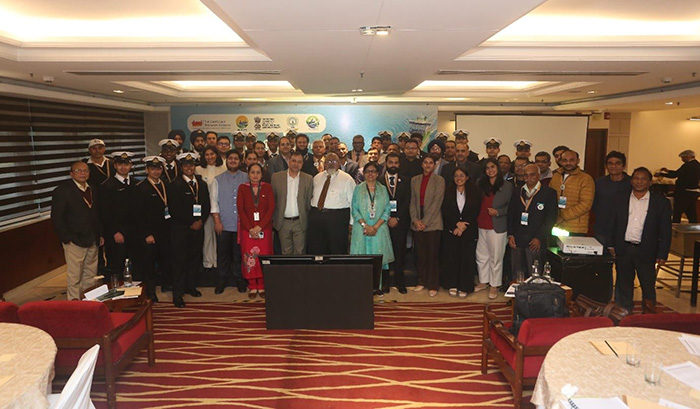
TERI and DG Shipping jointly organised a two-day national workshop titled “Maritime India @ Net Zero: Pathways for Decarbonising Shipping, Ports and Inland Waterways” to facilitate informed dialogue on India’s transition towards a low- and zero-emission maritime sector. The workshop focused on presenting the National Green Shipping Policy’s structure while fostering stakeholder dialogue to align India’s maritime decarbonization with global standards.
Know MoreHigh-Level Convening of Indian Business Leaders
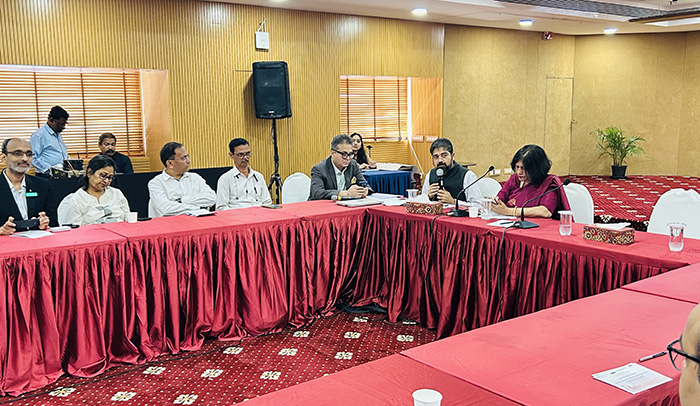
The convening brought together senior leaders from Indian industry, impact investors, and private equity firms to build momentum for the Silver Jubilee edition of WSDS 2026. This strategic engagement successfully bridged the gap between policy, business, and finance, highlighting the Indian private sector’s leadership in driving climate solutions. The discussions shaped a coherent message for upcoming international platforms like the World Economic Forum, solidifying WSDS’s 25-year legacy as a premier catalyst for sustainable action and finance.
Know MoreNational Workshop on Clean Air Zones
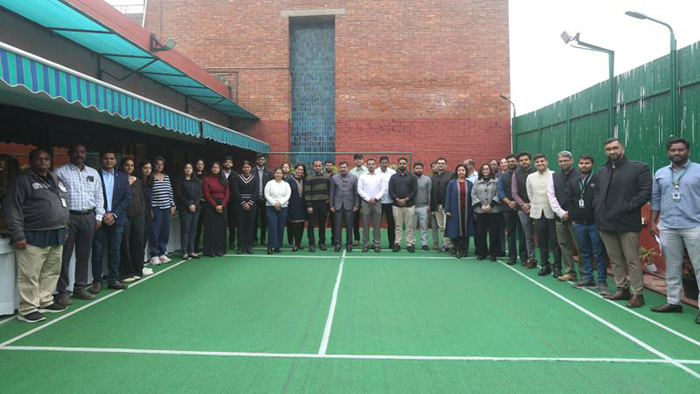
TERI, in partnership with Artha Global, convened a National Workshop on Clean Air Zones to present their ongoing CAZ work in Vijayawada and Visakhapatnam and to highlight Andhra Pradesh’s significant progress in addressing urban air quality and environmental sustainability. The focus of the workshop was to bring attention to AP’s approaches to growth and sustainability as the state rapidly urbanises.
Know MoreStakeholder Consultation Workshop on Scaling BIPV Integration in India: Challenges and Opportunities
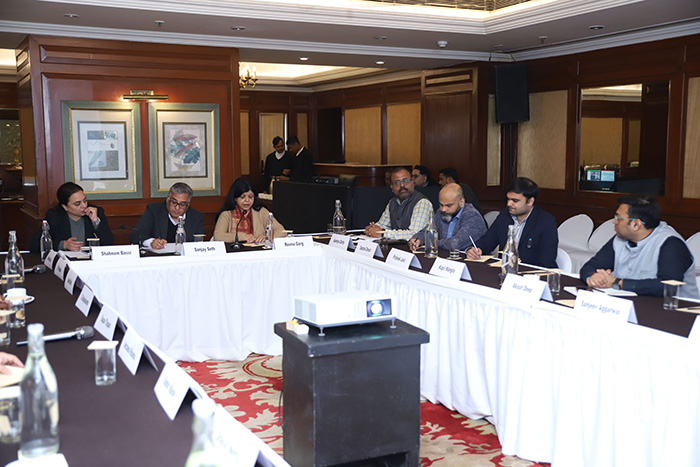
TERI and the GRIHA Council hosted a National Stakeholder Consultation on “Scaling BIPV Integration in India: Challenges & Opportunities” at the India Habitat Centre, New Delhi on 21 January, 2026. Building-Integrated Photovoltaics (BIPV) represents the next frontier in urban sustainability—where solar generation is seamlessly integrated into facades, glazing, and shading devices, eliminating the need for additional land requirements.
Know MoreTERI, NBSC, and NABARD Lead National Dialogue on Climate Finance & Risk Preparedness
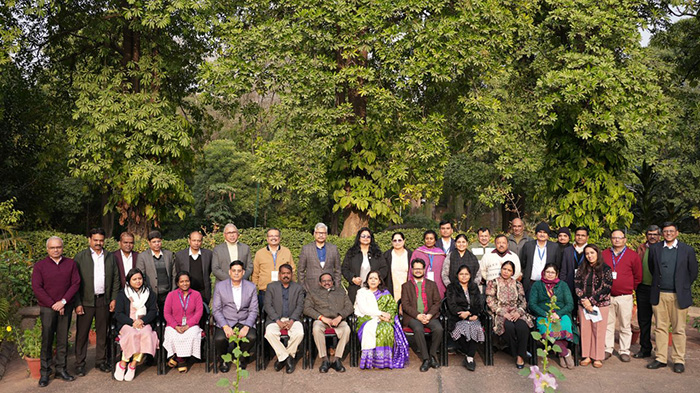
The Energy and Resources Institute (TERI), in collaboration with the Nation Bank Staff College (NBSC), concluded a three-day residential training programme on “Climate Finance Opportunities and Risks”, held from 7–9 January 2026 at the TERI Gram Campus, Gwal Pahari. The participants were senior officials from state offices of the National Bank for Agriculture and Rural Development (NABARD).
Know MoreTERI and CSR TIMES Forge Strategic Alliance via an MoU
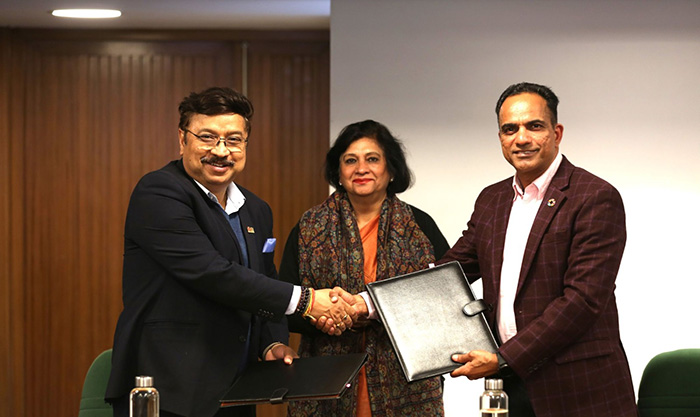
TERI and CSR TIMES entered a formal strategic partnership on January 6, 2026. This collaboration was solidified by an MoU. The agreement marks a transition from traditional philanthropy toward a robust, knowledge-driven CSR ecosystem designed to align corporate resources with India’s national priorities and the Sustainable Development Goals (SDGs).
Read More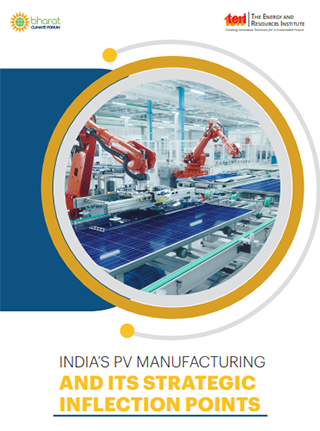
India’s PV Manufacturing & Its Strategic Inflection Points
Released by TERI at the Bharat Climate Forum 2026, this report highlights India’s transition from module self-sufficiency to upstream vulnerability. While module capacity is robust, critical dependencies on imported polysilicon, wafers, and manufacturing equipment persist. To secure long-term competitiveness, the study advocates for domesticating toolchains, securing low-cost blended capital, and adopting digital traceability for global ESG compliance.
Know More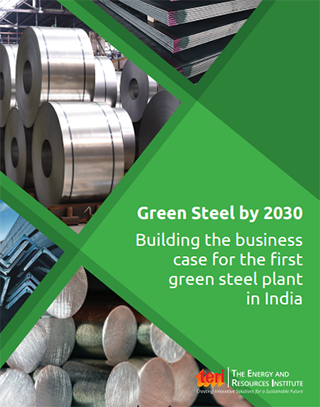
Green Steel by 2030: Building the business case for the first green steel plant in India
Building on TERI’s established work in energy efficiency, hydrogen integration, and net-zero pathways, this publication assesses the financial viability of green steel through project-level modelling of diverse plant archetypes. The analysis examines critical levers such as carbon pricing, concessional finance, and green premium offtake commitments. Specifically, it evaluates three frameworks informed by extensive stakeholder input: the policy stack, offtake commitments, and capital cost subsidies.
Know More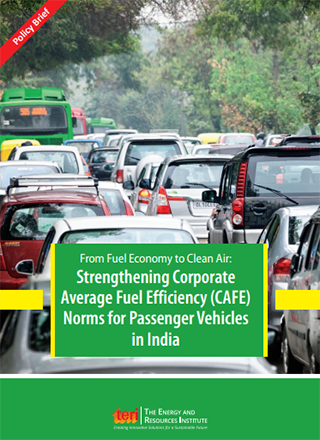
From Fuel Economy to Clean Air: Strengthening Corporate Average Fuel Efficiency (CAFE) Norms for Passenger Vehicles in India
While CAFE norms were primarily designed to reduce fuel consumption from PVs, their relevance in curbing CO₂ emissions has become increasingly evident. More efficient vehicles consume less fuel per kilometre, leading to lower emissions when scaled across large vehicle fleets. This policy brief provides analytical inputs to the proposed CAFE norms and examines how India’s CAFE framework can be recalibrated to strengthen its effectiveness.
Know MoreThe issues with Venezuela are more than a decade old. So why did Trump do what he did now?
Trump 1.0 was an accidental presidency where institutionalists, many with a military background, held sway. Breaking away from Pax Americana was not their way. Trump 2.0 has no such guardrails writes Mr Manjeev Singh Puri, Distinguished Fellow, TERI.
Know More
Rethinking water safety beyond Indore tragedy
The new 'air-to-water' technology extracts moisture naturally present in the air and converts it into potable water write Dr Syamal Kumar Sarkar, Senior Advisor, TERI & Capt K. K Sharma (Retd).
Know More
Belém Indicators Explained: The New Climate Scorecard India Cannot Ignore
With climate risks rising, new Belém Adaptation Indicators aim to guide funding and action, as India looks to align its national adaptation plans with local realities and climate resilience goals, write Mr Shri Prakash, Distinguished Fellow & Ms Sonal Singh, Research Associate, TERI.
Know MorePath to Resilient Livelihoods
The new rural employment reform links social protection with climate adaptation, positioning wage programmes as engines of resilience, sustainability and inclusive rural growth, writes Dr Vibha Dhawan, Director General, TERI.
Beyond Emergency Measures: Long-Term Solutions to India’s Winter Air Pollution Crisis
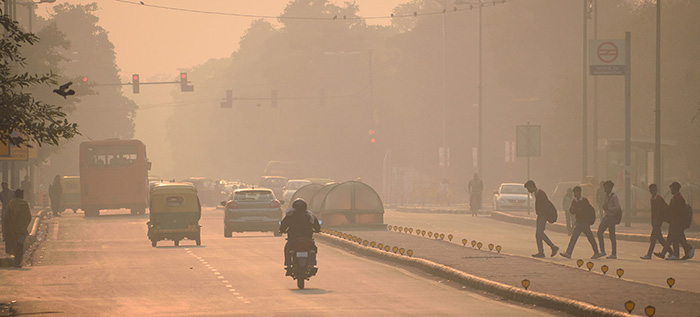
This article written by Dr Pavan Kumar Nagar summarizes India’s winter air pollution, role of meteorology, emission sources and their mitigation, hidden drivers of winter pollution, and requirement of airshed-based approach, preventive action, and sustained emission reductions beyond emergency measures.
View AllTAKE 3
Take 3 is a short video featuring in-house experts who answer three pertinent questions on current issues.
TAKE 3: Why National Bird Day Matters in 2026
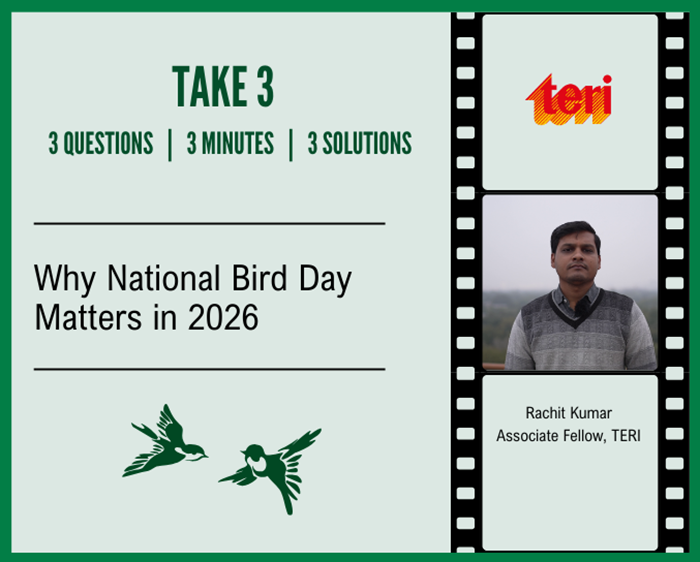
They’re more than just a beautiful song in the morning. Mr Rachit Kumar, Associate Fellow, explains how birds help in pollinating plants, spreading seeds and controlling pests. Birds are essentially the foundational pillar of global biodiversity. When bird populations struggle, the entire ecosystem feels the ripple effect. Watch the latest TAKE 3 to see understand how these winged wonders keep our world in balance.
Watch HereBeyond the Fog: Decoding India’s Erratic Winter Cycle
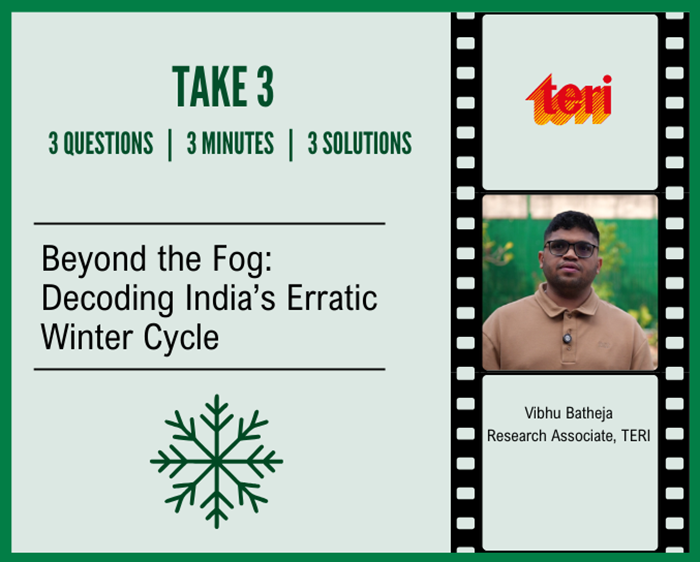
If you felt like this winter was 'off', the data confirms you’re right. In this edition of TAKE 3, Vibhu Batheja Research Associate, TERI explains why we have witnessed one of India’s most erratic winter cycles on record—marked by missing Western Disturbances and a stubborn El Niño influence.
Watch HereTERI (The Energy and Resources Institute)
Darbari Seth Block, Core 6C, India Habitat Centre, Lodhi Road,
New Delhi - 110 003, INDIA
Tel. : (+91 11) 2468 2100, 7110 2100
E-mail : mailbox@teri.res.in