| |
Mainstreaming Sustainability in Business Planning and Practices |
|
|
|
|
|
|
|
|
|
|
|
Dear Industry Colleague,
Marked as the only independently convened international
Summit on sustainable development and environment based in the Global South, we
are proud to share that the World Sustainable Development Summit (WSDS) 2024
concluded this month with great success. Through 16 plenaries and 31 thematic
tracks, the Summit saw deliberations over 3 days on various crucial issues
related to sustainable development and climate action. More than 800 delegates
participated in the Summit. Leadership teams from our
Council’s network attended the Summit and shared perspectives on various themes
across the 3 day-long Summit.
A dedicated centre focused on energy transitions was announced by Hon’ble Power
Minister Shri RK Singh. This provides a significant leverage to
TERI’s ongoing work on various facets of energy transitions and industry
decarbonization, well supplemented by actions undertaken by the signatory
companies of the Industry Charter for Near-Zero
Emissions Ambition by 2050, instituted by TERI. We will be delighted to
deepen our engagements with the industry players and value chain stakeholders.
We are keenly seeing the recent announcement on Draft
Guidelines on Environmental Claims/Green Claims by Advertising Standards
Council of India. The Guidelines clearly specify that absolute claims such as
‘environment-friendly’, ‘eco-friendly’ ‘sustainable’, and ‘planet friendly’
must be supported by a “high level of substantiation”. In addition, the
Guidelines also lay down that advertisers must also specify whether the
environmental claim being made refers to the entire product, packaging or
service. The draft guidelines are a crucial and much needed step towards
ensuring transparency, accountability and authenticity of claims in advertising
to serve the interest of not only the consumers, but in the interest of
environment and the society at large. A recent meeting with Sustainability
Officers reflected on the various challenges at corporate and value
chain level towards mainstreaming ESG considerations.
Jointly developed with Shell, our report titled “India Transforming To A Net-Zero
Emissions Energy System - A call to action to 2030” shall provide
you with key messages of how clean energy will look like in the decades to
come. Technical proposals on why storage of electricity is
necessary for meeting demand round the clock and the details of range of possible mitigation
strategies for Net Zero steel sector are available.
Our Council for Business Sustainability serves as the
interface for our research work to be connected to the corporate world and
enables two-way engagement. TERI CBS engages with the core issue of what
businesses must do to shape and lead in sustainability. Your suggestions and feedback
remain a constant source of inspiration for us.
We hope that the newsletter provides a good and
insightful reading for you.
- Arupendra Nath Mullick, Vice President - TERI CBS |
|
|
|
|
|
India’s 2030
nationally determined contributions (NDCs) commitments aim to reduce emissions
intensity of the GDP by 45% from 2005 level, and achieve 50% of cumulative
electric power installed capacity from non-fossil fuel-based energy resources. Given
these targets, businesses and organisations need to work collectively to help
India fulfil its commitments.
Hitachi Energy India
Limited, a global leader in power technologies, is working towards providing
growing number of solutions for electricity with minimum environmental impact.
Combined with TERI’s research work on energy transitions, like modelling low-carbon energy pathways, the two organisations have come together to
leverage their capabilities to create impact for the government, industries and
the financial institutions. |
|
|
|
"For the first time in history, there is a clear destination of the 2070 net
zero goal and while the journey has already started, it will take several
generations of people to contribute to it"
- Mr. Akilur Rehman, Chief Technology Officer, Hitachi Energy India Limited (at the 'High Level Convening of Industry Charter for Near Zero Emissions by 2050' held during TERI's annual flagship World Sustainable Development Summit )
| |
|
|
|
|
|
TERI’s
Expert Group on Financing India’s Long Term Low-Carbon Development Strategies
As India
aspires to become Net Zero by 2070, the economic and policy choices it makes
will require the creation of an ecosystem that enables it to implement this
long-term goal. The Government of India’s Long-Term Low-Carbon Development
Strategy (LT-LCDS) unveiled at COP27 offers the framework within which economic
and policies choices should be made.
The Expert
Group on Financing India’s Long-Term Low-Carbon Development Strategies comprises
of members from the industry and the financial sector, and aims to mobilise
finance and policy environment towards financing green and just transition in
India’s hard-to-abate sectors.
Initiated with the support
of Bloomberg Philanthropies, the Expert Group will evaluate India’s financial
strategy with respect to LT-LCDS, particularly in the context of Indian steel
industry and the adjacent MSME sector, analyse policy frameworks and
investments, and share recommendations that can enable financing technology transfers. | |
|
|
|
|
|
|
|
Important Reads
Competitive bidding for
Pump Storage Plants Development
Growth in renewable energy requires
a requisite growth in energy storage. The Central Electricity Authority (CEA) estimates
that India will require 74 GW of storage by 2030.
It is currently estimated that
India holds an energy storage potential of 119 GW on river systems, and is
presented with an opportunity to develop hydro pump storage plants (PSPs). Recently,
the Ministry of Power issued guidelines for development of PSPs, with the CEA
making the clearance process speedier.
Mr. Ajay Shankar, Distinguished
Fellow, TERI, highlights in this op-ed, how development of PSPs can be further
accelerated with the Central and State governments undertaking actions to
reduce risks. The Ministry of Power’s Ultra Mega Power Plants (UMPP) policy
presents one such example where risks emanating from land and environmental clearance
were drastically reduced due to proactive government intervention. |
|
|
|
Sustainable Development:
Where is Sustainable Finance?
Progress on financing sustainable development has been slower than
expected, writes Mr. R R Rashmi, Distinguished Fellow, TERI, in this op-ed on
sustainable finance.
Changes in lifestyle patterns and corporate behavior are crucial for the
achievement of sustainable development. While the corporate world has committed
to sustainable development through investments linked to the Environment, Social and Governance (ESG) criteria,
assets under management of ESG related investments continue to remain low. Further, production and consumption patterns
have hardly changed. Enabling these changes is dependent on: i) enhanced policy support that orients corporate
investments to green sectors, ii) an uninterrupted
flow of sustainable finance, and iii) reduced risks in green investments.
Development of financial instruments that help reduce
physical and transition risks of climate change require standardized taxonomies for green investments
while enabling systemic provisions to cover risks. |
|
|
|
Government of
India announces new Centre for Energy Transition in collaboration with TERI
Union Minister for Power and New & Renewable Energy, Shri R. K. Singh
announced setting up of a Centre for Energy Transition, as a collaborative
initiative between the Government of India and The Energy and Resources
Institute (TERI).
With this Centre, TERI is expected to play a pivotal role
in identifying pathways for sustainable energy transition and foster innovation
in the renewable energy sector. |
|
|
|
|
|
|
|
Launch of TERI's Expert Group on Financing India's Long - Term Low Carbon Development Strategy | 19th April | Delhi
The launch of TERI's Expert Group on Financing India’s Long-Term Low-Carbon Development Strategies, comprising members from the industry and the financial sector with the aim of mobilising finance and policy environment towards financing green and just transition in India’s hard-to-abate sectors will take place on 19th April in Delhi.
|
|
|
|
|
|
|
|
High – Level
Convening of Industry Charter for Near Zero Emissions by 2050, 8th
February, Delhi
The 23rd edition of TERI's World Sustainable
Development Summit (WSDS) witnessed signatories to the Industry Charter for
Near Zero Emissions by 2050 convene for a roundtable discussion on
decarbonisation of heavy industries .
The convening chaired by Mr. R R Rashmi,
Distinguished Fellow, TERI, saw the participation of the founding signatory
CEO, Mr. Mahendra Singhi, Dalmia Cement (Bharat) Ltd, representatives from DISCOMs,
technology providers, sectoral associations, philanthropies, policy
researchers, and the financial and investment sector share their perspectives
on executing India’s 2070 net zero goal. |
|
|
|
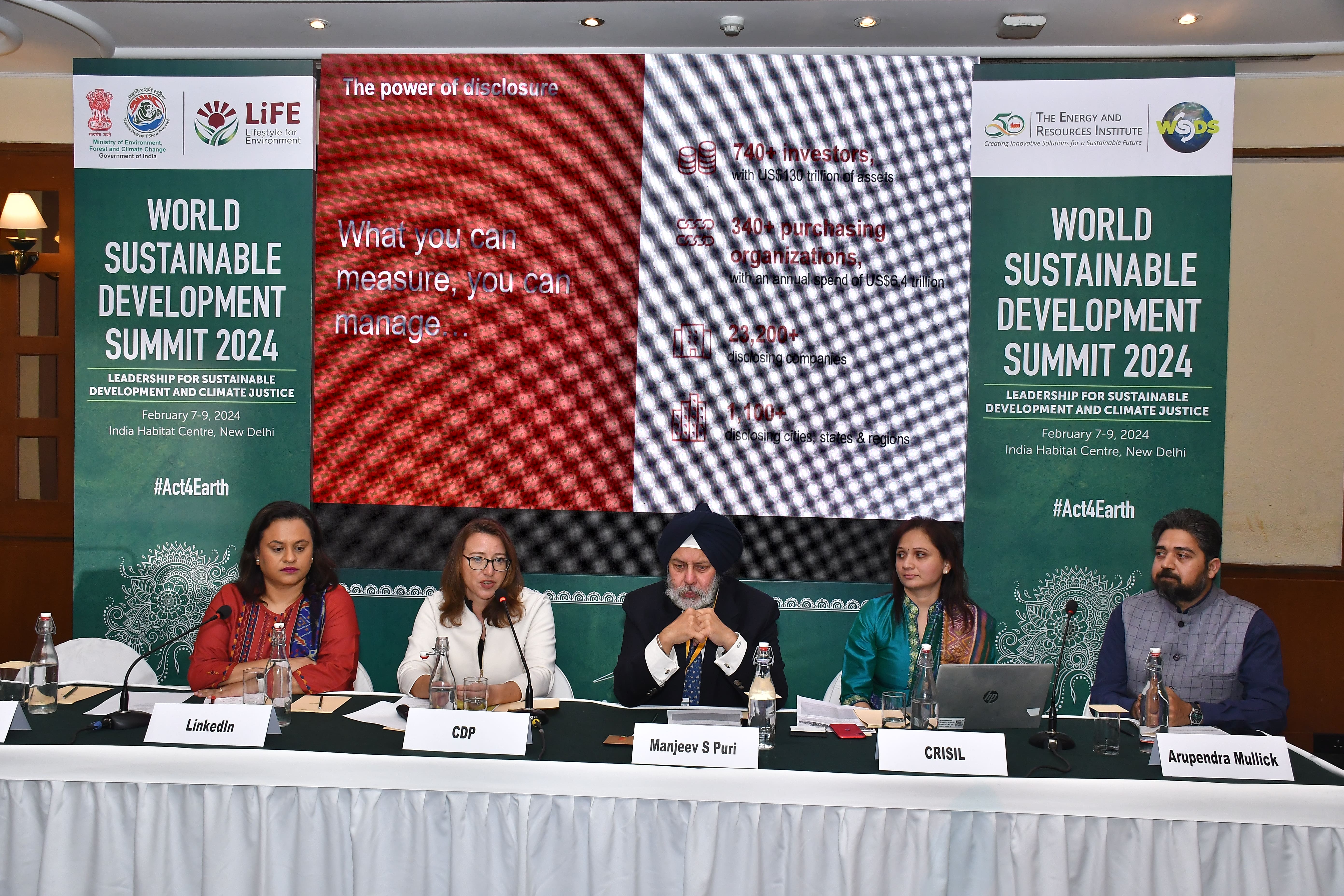
Meeting of
Chief Sustainability Officers, 8th February, Delhi
The 23rd edition of TERI’s World Sustainable Development
Summit saw a convening of the Chief Sustainability Officers (CSOs). The meeting
discussed imperatives for businesses to integrate sustainability into their
core strategies, and the unparalleled opportunities arising out of climate
change.
Panellists - Ms. Sherry Madera, CEO, CDP, Ms. Rama Patel,
Director, CRISIL and Ms. Aditi Jha, Director and Country Lead, Legal and
Government Affairs, LinkedIn, offered insights on the ESG ratings landscape in India,
the role of quality data for improved sustainability-focused capital deployment,
and the need to address widening green skill gaps. |
|
|
|
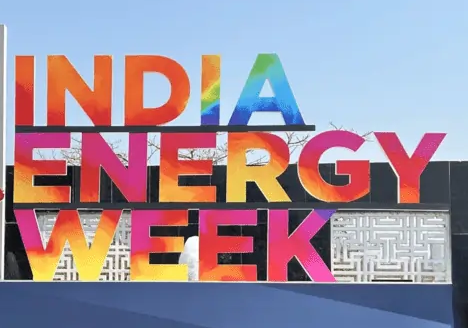
TERI at India Energy Week, 8th February, Goa
India Energy Week 2024 saw TERI participate and
contribute to key discussions on energy transitions and decarbonisation. Representatives
from TERI presented views and recommendations in two sessions of the event.
At the session on energy markets, green finance
and the economics of supply and demand, TERI shared insights into the role of cross-border
electricity trade in regional decarbonisation; at the session on global
hydrogen economy TERI shared a pilot case study on biohydrogen production from
lignocellulosic biomass. |
|
|
|
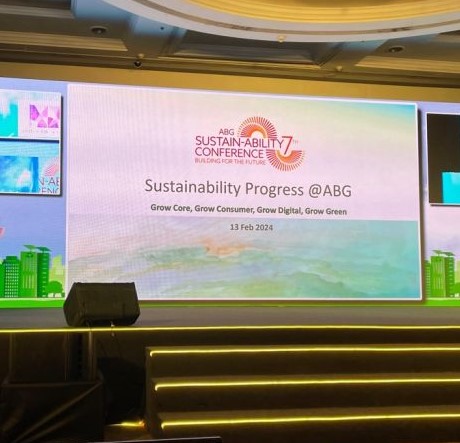
TERI at
Aditya Birla Group Annual Sustainability Meet, 13th February, Mumbai
TERI was part of the annual sustainability meet organized by the Aditya
Birla Group in Mumbai. Mr. R R Rashmi,
Distinguished Fellow, TERI, shared insights on global and domestic developments
during the panel session on accelerating low-carbon transitions.
Divulging the trends in decarbonisation, Mr. Rashmi
highlighted the initiatives on energy efficiency, renewables and hydrogen at
the recently concluded COP28, and their implications on businesses. He also
shared key regulatory changes at the global and domestic levels that could
enable technology transfer, and help finance low-carbon transitions. |
|
|
|
|
|
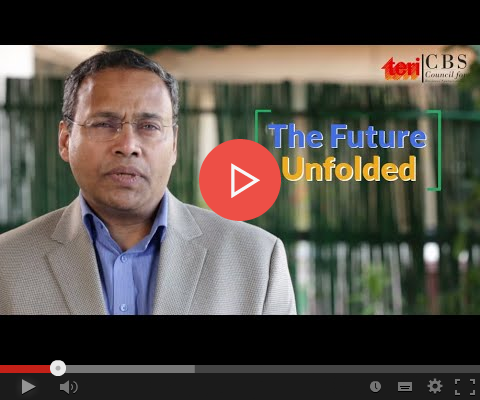
In Spotlight
As part of TERI’s Future Unfolded Series, watch TERI
CBS Executive Committee Co-Chair, Mr. R. Mukundan, Managing Director & CEO,
Tata Chemicals Ltd, share insights on incorporating sustainability across the
entire value chain of an organisation, and the role played by the industry in
shaping environmental and social well-being. |
|
|
|
|
|
TERI Research and Publications |
|
Accelerating the Growth of Green Bonds in India
Addressing climate change is
dependent on finding enormous financial resources, and especially private
finance. Green Bonds are increasingly becoming an appealing financial
instrument to attract private investors towards climate actions. However,
unlike the global market, green bonds in India occupy a low share of the
domestic bonds market.
This TERI policy brief analyses macro
and micro level challenges that hinder the growth of green bonds in India, and
recommends measures such as taxonomy, fiscal and policy levers,
awareness-building and innovative issuance strategies to overcome these
challenges.
|
|
Financing Decarbonisation of the
Secondary Steel Sector in India: Towards an Enabling Environment
The study 'Financing
Decarbonization of the Secondary Steel Sector India: Towards an Enabling
Environment' was undertaken by TERI in association with DIW Berlin.
The report highlights: i)
the potential of several low-carbon transition technologies and pathways for
the Indian secondary steel industry, ii) the challenges faced by the industry
in accessing finance for decarbonization technologies, and iii) the means of
creating an enabling environment that helps channelize international finance
towards technological upgradation of the sector.
|
|
|
|
India’s Electricity Transition Pathways to 2050: Scenarios and Insights
Analyses suggest that India is
expected to witness a fourfold growth in electricity demand with new
investments ranging between $1.2 to 1.6 trillion by mid-century.
In line with India’s announcement at COP26, this
TERI publication examines the No Fossil-fuel Scenario (NFS), and suggests that
with the phase down of coal after 2030, longer duration energy battery storage
capacity would aid in balancing intermittency with support from pumped hydro
storage. As renewables, batteries and electric vehicles (EVs) increase, the
power sector needs a holistic approach to coordinate multiple stakeholders while
securing India’s energy at affordable prices. |
|
Practices and Solutions:
Accelerating Indian Industry Decarbonisation
The anniversary update report of the Industry
Charter for Near Zero Emissions by 2050 titled ‘Practices and Solutions:
Accelerating Indian Industry Decarbonisation’ is prepared with inputs from the
charter signatory companies.
The report compiles 21 low-carbon solutions and
practices adopted by the Indian industry across their own operations and the
supply chain, covering initiatives on energy efficiency, renewable energy,
carbon capture and utilisation, and digital transformation.
This
compilation aggregates key trends emerging in the Indian industry, where businesses
are increasingly incorporating climate change into their continuity plans and
translating climate intentions into concrete actions. |
|
|
|
|
|
|
|
|
|
|





.png)
_min.jpg)