


News, Views, and Updates from TERI


Dear Reader,
June is officially here, and the momentum at TERI is stronger than ever. Coming off a highly impactful May, headlined by major milestones like ‘A Five Pillar Framework for Bankability: Recalibrating India’s Commercial Finance for Climate Action, discussion paper and the launch of 'Indian Armed Forces and Environmental Sustainability: A Comprehensive Assessment of Simulators in ‘Green Training’ study. As we head into the second half of the year, our focus remains sharp: deep-diving into pioneering research and delivering the actionable solutions needed to drive sustainable development across the globe.
Indian Armed Forces and Environmental Sustainability: A Comprehensive Assessment of Simulators in ‘Green Training’
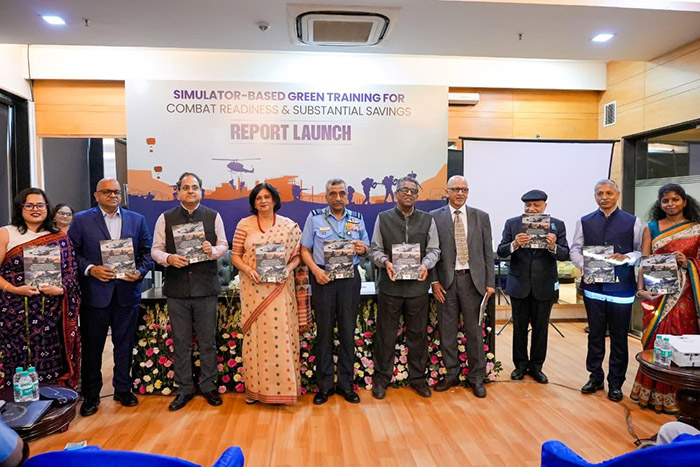
This report evaluates simulator-based military training as a sustainable, cost-effective alternative to conventional live exercises in the Indian Armed Forces. Covering five major combat arms and 13 simulator systems, the study utilizes a Life Cycle Assessment (LCA) framework and Net Present Value (NPV) calculations. It demonstrates how ‘green training’ drastically reduces carbon emissions, resource consumption, and operational costs while maintaining combat readiness and aligning with India’s climate goals.
Know MoreA Five Pillar Framework for Bankability: Recalibrating India’s Commercial Finance for Climate Action
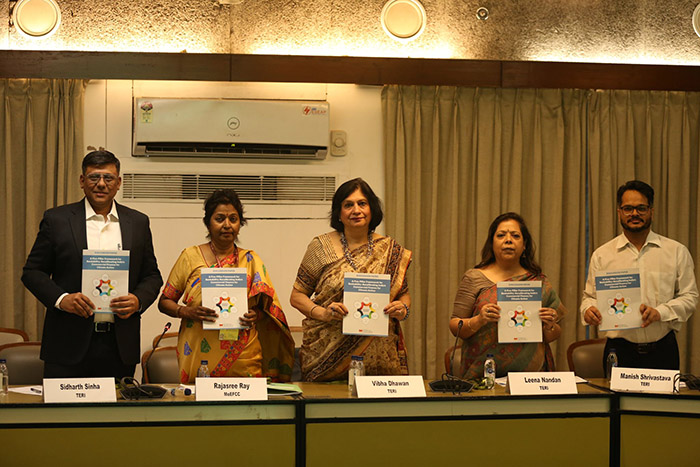
To align commercial capital with sustainable development, TERI’s discussion paper, A Five Pillar Framework for Bankability, outlines a roadmap to mobilize a required USD 2.5 trillion for India's climate action by 2030. Authored by Sidharth Sinha and Dr Manish Kumar Shrivastava, the paper identifies five critical barriers currently constraining commercial banks. To mainstream these climate investments, it proposes a strategic five-pillar framework focusing on regulatory certainty, stable revenues, delivery capability, risk-sharing mechanisms, and capital-stack fitness.
Know MoreRRECL, Government of Rajasthan and TERI Sign an MoU to Advance Rajasthan’s Clean Energy Transition
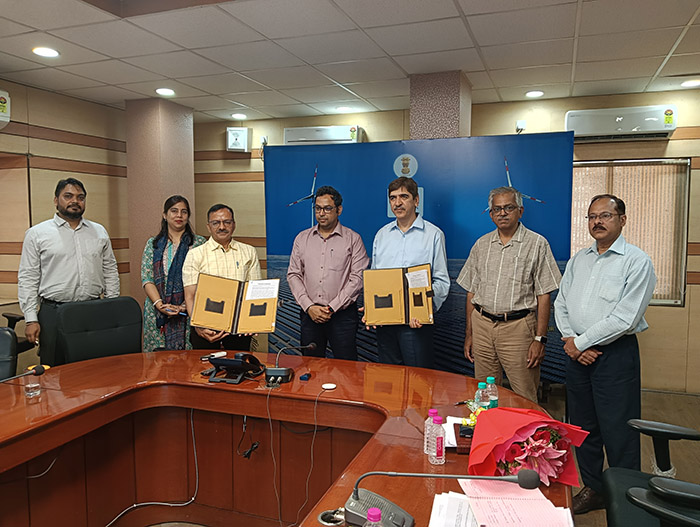
Rajasthan Renewable Energy Corporation Limited (RRECL), Government of Rajasthan, and The Energy and Resources Institute (TERI) signed a Memorandum of Understanding (MoU) today to collaborate on advancing renewable energy deployment, energy transition strategies, and sustainable development initiatives in Rajasthan. The partnership aims to strengthen cooperation in areas including renewable energy, Agri-PV initiatives, energy storage solutions, grid integration, innovative policy frameworks, electric mobility, energy transition, emerging technologies, and capacity building initiatives.
Know MoreTERI Discusses Pathways for Scaling Concentrated Solar Power (CSP) and Thermal Energy Storage (TES) in India
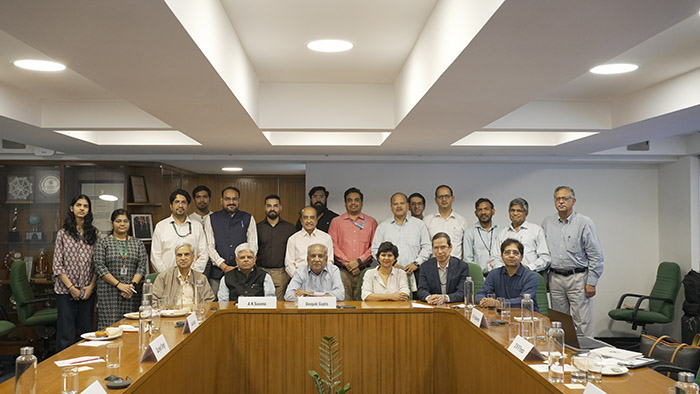
TERI convened a high-level stakeholder discussion on “Firm Dispatchable Renewable Energy for Viksit Bharat: The Role of Concentrated Solar Power (CSP) Technologies with Thermal Energy Storage (TES)” at the India Habitat Centre, New Delhi on 29 May 2026. The stakeholder consultation brought together policymakers, developers, industry leaders, utilities, financial institutions, and technology providers to deliberate on the growing need for firm dispatchable renewable energy (FDRE) solutions as India advances its clean energy transition.
Know MoreLaunch of ‘India’s Nuclear Energy Vision: Strategic Pathways for SMR Deployment’
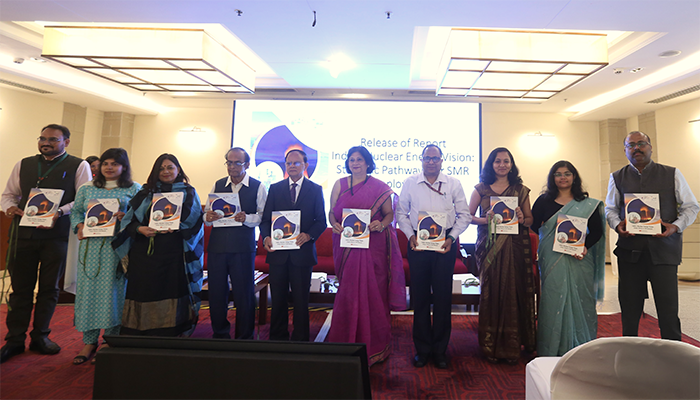
TERI released its report, India’s Nuclear Energy Vision: Strategic Pathways for SMR Deployment, at a high-level event at the India Habitat Centre. Convening government officials, policymakers, and industry leaders, the report outlines the role of nuclear energy and Small Modular Reactors (SMRs) in driving India's clean energy transition. The publication emphasizes the need for secure, reliable, round-the-clock low-carbon energy to support India's vision of becoming a developed nation by 2047.
Know MoreTERI Convenes Multi-Stakeholder Roundtable in Coimbatore on Inclusive EV Transition
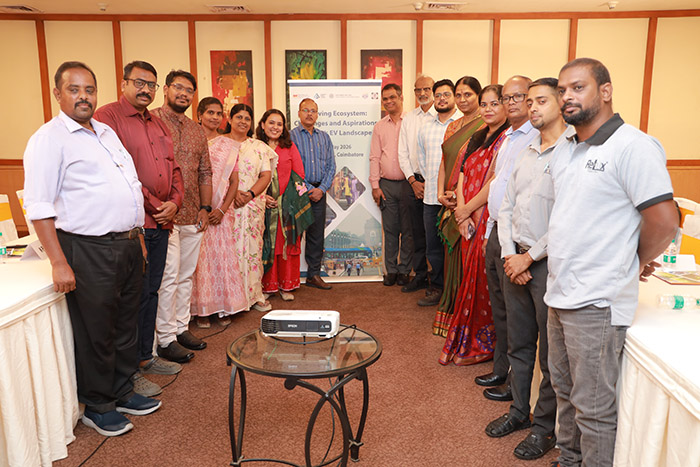
TERI convened a roundtable discussion on “EVolving Ecosystem: Challenges and Aspirations in India’s EV Landscape” at Vivanta, Coimbatore, bringing together representatives from government, academia, skill development institutions, civil society organizations, and the mobility sector to deliberate on pathways for an inclusive electric mobility transition in India. The discussion revolved around critical themes including infrastructure readiness, accessible mobility systems, inclusive EV design, financing mechanisms, skill development, workforce participation, and policy interventions required to strengthen India’s evolving EV ecosystem.
Know MoreTERI and NCoEGPS Lead National Dialogue on Green Shipping under Maritime INDIA @ Net Zero
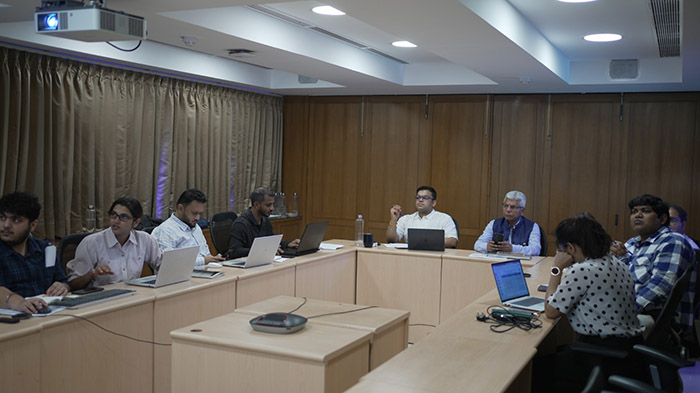
The Directorate General of Shipping (DGS), in collaboration with the National Centre of Excellence in Green Ports and Shipping (NCoEGPS) at TERI has organized a three-day national webinar from 6–8 May 2026 under the Maritime INDIA @ Net Zero initiative to advance stakeholder consultations for the National Green Shipping Policy (NGSP). The webinar series aims to bring together policymakers, regulators, industry stakeholders, financial institutions, and technical experts to deliberate on actionable pathways for decarbonizing India’s maritime sector across the supply chain.
Know More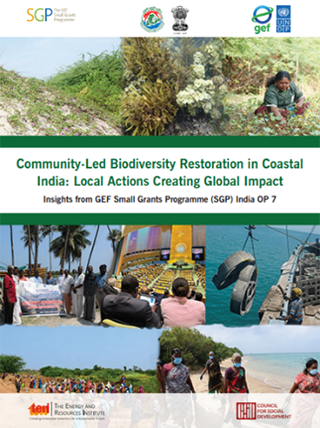
Community-Led Biodiversity Restoration in Coastal India: Local Actions Creating Global Impact
On the International Day for Biological Diversity 2026, the Global Environment Facility Small Grants Programme (GEF-SGP) India Operational Phase-7 (OP7) launched a new publication titled, Community-Led Biodiversity Restoration in Coastal India: Local Actions Creating Global Impact. The publication has been prepared under the GEF-SGP India OP7, executed by the Ministry of Environment, Forest and Climate Change (MoEF&CC), Government of India, implemented by the United Nations Development Programme (UNDP), and coordinated by TERI, which serves as the National Host Institution. The booklet has been developed by TERI in collaboration with the Council for Social Development (CSD), Knowledge Partner for SGP-India OP7.
Know MoreAs war rages: Coal anchors India’s energy security
As the West Asian conflict continues to unsettle global oil and gas corridors, the urgency of energy security is no longer abstract, it is immediate and real. Coal, for now, remains India’s most reliable fallback, keeping the lights on when uncertainty looms, write Dr Jayanta Mitra, Senior Fellow and Dr Jay Ganesh Pandey, Research Associate, Electricity & Renewables Division, TERI
Know MoreBuilding demand for green steel and cement
India needs stronger demand, policy support, and green procurement to make low-carbon steel and cement commercially viable and accelerate industrial decarbonisation, write Ms Taruna Idnani, Associate Fellow and Dr Shailly Kedia, Senior Fellow, Resource Efficiency & Governance Division, The Energy and Resources Institute (TERI).
Know More
Oslo summit must mark India’s northward turn
Changing Arctic geopolitics gives India-Nordic ties renewed strategic significance, writes Mr Ajai Malhotra, Distinguished Fellow and Senior Advisor, TERI.
How Nano Fertilisers Can Optimise India’s Fertiliser Subsidy Burden
Nano fertilisers may help India cut subsidy burden while boosting sustainable agricultural productivity, writes Dr Vibha Dhawan, Director General and Dr Pushplata Singh, Director, Sustainable Agriculture Division, TERI.
Know MoreTAKE 3
Take 3 is a short video featuring in-house experts who answer three pertinent questions on current issues.
Beyond the Honey: Why Bees are the Food Anchor of the World
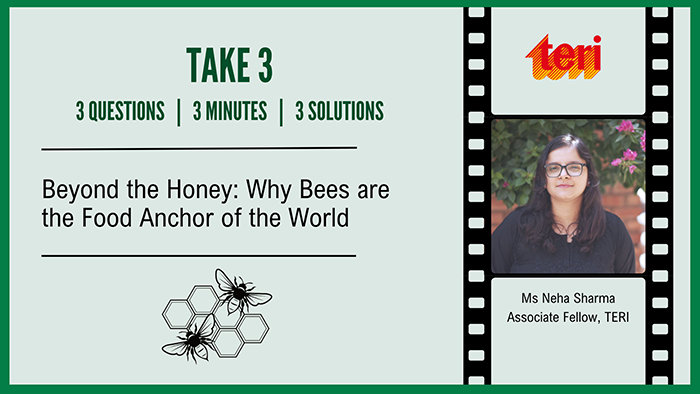
When we look at a bee, we usually just think of honey. But this tiny insect is actually a foundational anchor of our global food system and economy, with 3 out of 4 major crops relying entirely on pollinators. For #WorldBeeDay, Neha Sharma, Associate Fellow TERI, breaks down How bees quietly drive the global agricultural economy and how habitat loss and climate shifts disrupting this ancient bond.
Watch HereUnder the Hood: What’s Really Driving India’s Fuel Prices?
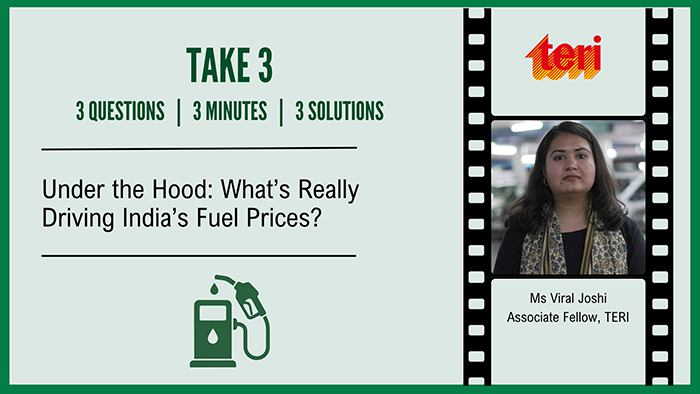
While the West Asia crisis pushes global crude costs up, everyday commuters are feeling the pinch. Is it finally time to buy an EV, or is the math more complicated than it looks? In the latest edition of TAKE3, ‘Under the Hood: What’s Really Driving India’s Fuel Prices?’ Ms Viral Joshi, Associate Fellow, TERI breaks down the hidden realities of the current fuel crisis and offer practical strategies to protect your household budget.
Watch HereGreen Olympiad 2026

Established in 1999, TERI’s GREEN Olympiad is India's premier annual environment-focused examination. Designed for students in Grades 4–12 across nearly 2,000 schools globally, it aligns with NEP 2020 and SDG Target 4.7 to foster sustainability and green skills. The paper-based, multiple-choice assessment covers environmental topics ranging from water and biodiversity to current affairs, while converging with Mission LiFE and the MoEFCC.
Registration Deadline: 18 August 2025
TERI (The Energy and Resources Institute)
Darbari Seth Block, Core 6C, India Habitat Centre, Lodhi Road,
New Delhi - 110 003, INDIA
Tel. : (+91 11) 2468 2100, 7110 2100
E-mail : mailbox@teri.res.in