|
| |
TERI AND BEE STRENGTHEN NATIONAL CAPACITY THROUGH ECSBC MASTER TRAINER PROGRAMME |
|
|
|
|
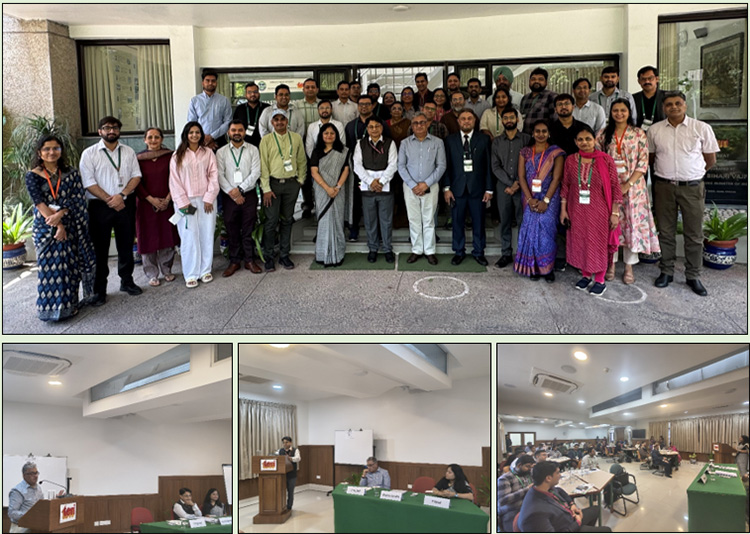
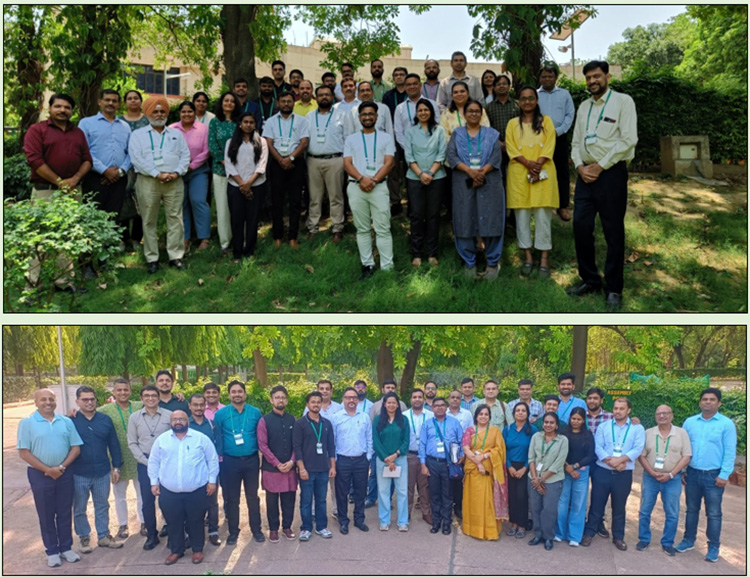
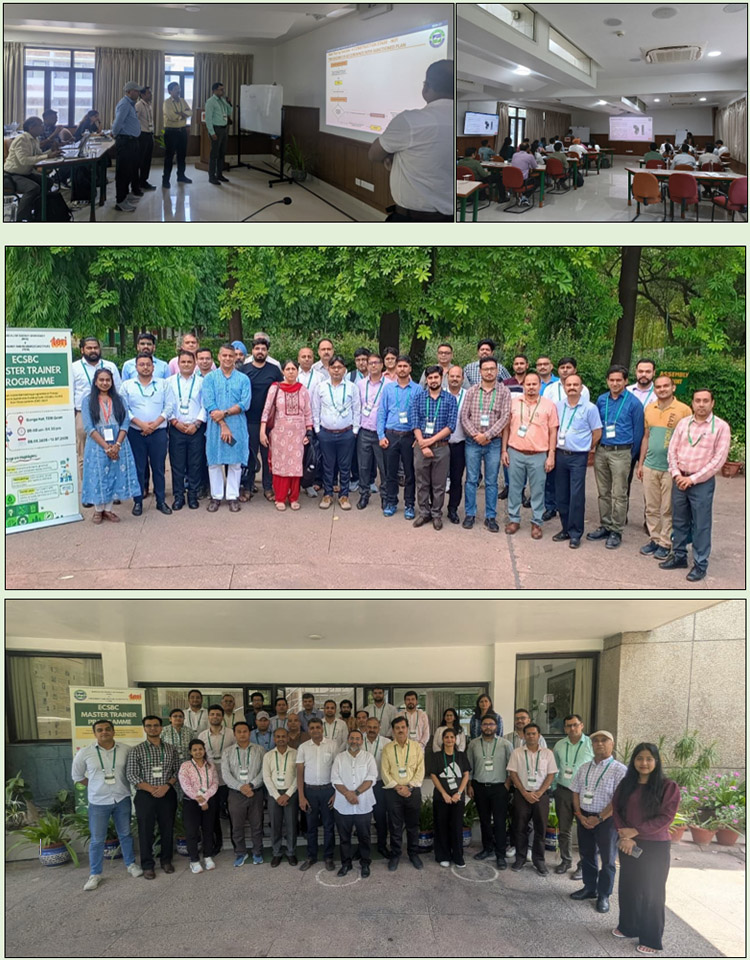
The Energy and Resources Institute (TERI), in collaboration with the Bureau of Energy Efficiency (BEE), Ministry of Power, Government of India, successfully conducted the first five batches of the Energy Conservation and Sustainable Building Code (ECSBC) Master Trainer Programme at TERI Gram, Gurugram, from 8 June to 10 July 2026.
The five-day residential programme is a flagship capacity-building initiative aimed at developing a nationwide pool of certified Master Trainers to support the implementation of the Energy Conservation and Sustainable Building Code (ECSBC) 2024 and Eco Niwas Samhita (ENS) 2024. Over the course of the first five batches, the programme brought together architects, engineers, consultants, energy managers, government officials, academicians, researchers, and sustainability professionals from across India, fostering a collaborative platform for advancing energy-efficient and climate-responsive buildings. |
|
| |
|
| |
The inaugural session of the first batch featured addresses by Shri Krushna Chandra Panigrahy, Director General, BEE; Ms Pravati Samal, Director, BEE; and Mr Sanjay Seth, Senior Director, TERI, who highlighted the critical role of energy-efficient buildings in enhancing India's energy security, reducing carbon emissions, and achieving national sustainability goals.
Designed to combine technical knowledge with practical application, the programme covered a wide range of topics including climate-responsive building design, sustainable site planning, building envelope performance, energy-efficient lighting and electrical systems, HVAC technologies, building energy simulation, renewable energy integration, water conservation, waste management, and ECSBC compliance pathways. Interactive discussions, simulation exercises, case studies, and participant presentations provided hands-on learning and encouraged knowledge exchange among professionals from diverse sectors. |
|
| |
|
| |
Participants who successfully completed the programme and met the evaluation requirements were certified as ECSBC Master Trainers, enabling them to support capacity building, code implementation, and sustainable building practices within their respective organisations and states.
By creating a strong network of trained professionals across the country, the ECSBC Master Trainer Programme is expected to play a significant role in accelerating the adoption of energy-efficient, resource-efficient, and climate-responsive buildings, contributing to India's transition towards a low-carbon built environment. |
|
| |
|
| |
|
| |
TERI LAUNCHES INDIA'S FIRST CITYWIDE SMART SURFACES ASSESSMENT FOR BHOPAL |
|
|
|
|
|
| |
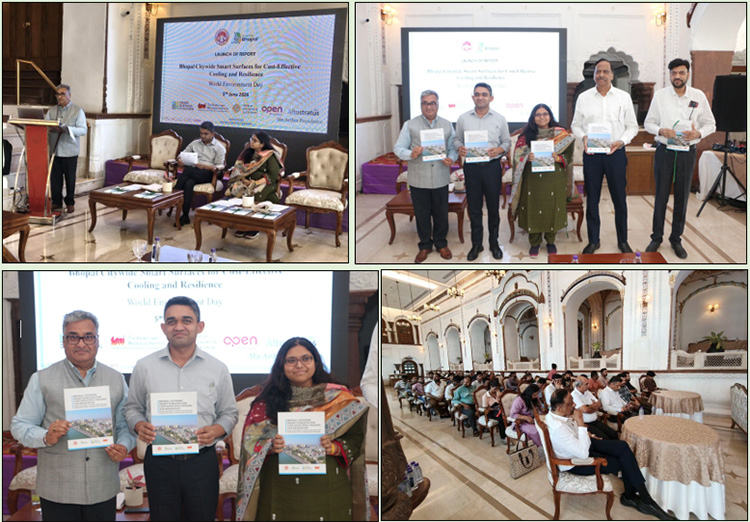
On the occasion of World Environment Day 2026, TERI, in partnership with the Smart Surfaces Coalition (SSC) and Bhopal Smart City Development Corporation Limited (BSCDCL), launched the report "Bhopal Citywide Smart Surfaces for Cost-Effective Cooling and Resilience" along with the Benefit-Cost Analysis Tool (BCAT) for Bhopal.
The report was formally unveiled by Mr Sanjay Seth, Senior Director, TERI; Smt Anju Arun Kumar, CEO, BSCDCL; Smt Sanskriti Jain, Commissioner, Bhopal Municipal Corporation; Shri Priyank Mishra, IAS, District Collector, Bhopal; and Er Jitendra Vyas, Structural Engineer & Sustainability Consultant.
Developed jointly by the Department of Urban Development & Housing, Government of Madhya Pradesh, BSCDCL, TERI, and the Smart Surfaces Coalition, with support from the MacArthur Foundation, the study presents India's first citywide Smart Surfaces assessment. The report demonstrates how integrated interventions such as cool roofs, reflective pavements, urban greening, rainwater harvesting, and rooftop solar can effectively mitigate urban heat, improve thermal comfort, strengthen climate resilience, and support sustainable urban development. The accompanying Benefit-Cost Analysis Tool (BCAT) provides city planners and policymakers with a practical decision-support framework to evaluate and prioritize smart surface interventions based on their economic, environmental, and social benefits. |
|
| |
| |
BASELINE ASSESSMENT SITE VISITS TO HARIDWAR AND DEHRADUN UNDER THE ADB-SUPPORTED AFFORDABLE HOUSING PROJECT |
|
|
|
|
|
| |
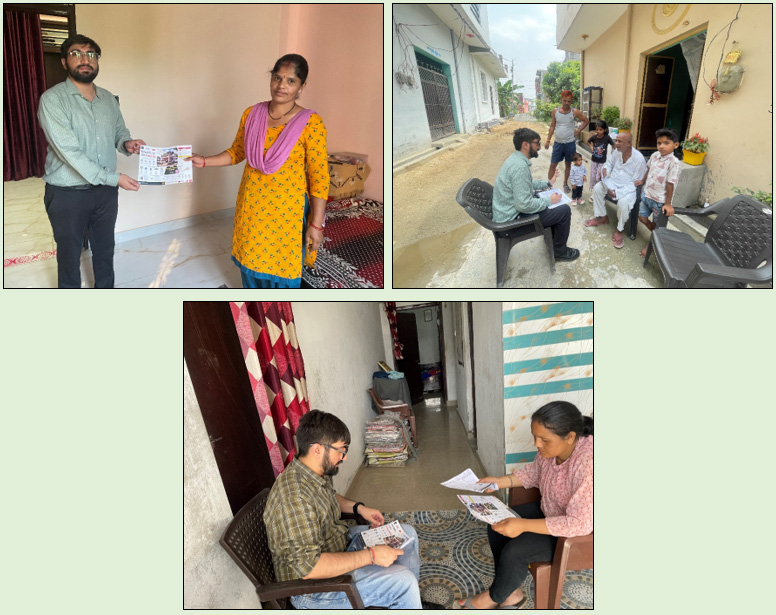
As part of the Asian Development Bank (ADB) project on Green Certification of Self-Constructed Affordable Housing, TERI conducted field visits across Haridwar, Roorkee and Dehradun to assess self-built affordable homes and engage directly with homeowners.
The visits focused on evaluating existing housing conditions, documenting sustainable practices and identifying opportunities for low-cost green upgrades in areas such as energy efficiency, water conservation, thermal comfort, indoor environmental quality and waste management. The assessments also helped understand homeowner preferences and implementation challenges, providing critical inputs for developing customized green upgrade plans and advancing certification-ready, climate-responsive, and resource-efficient housing solutions.
Link: https://youtu.be/s4daYtT1cAo |
|
|
|
|
Missing Benchmark in Urban Water Governance
By Ms Tarishi Kaushik
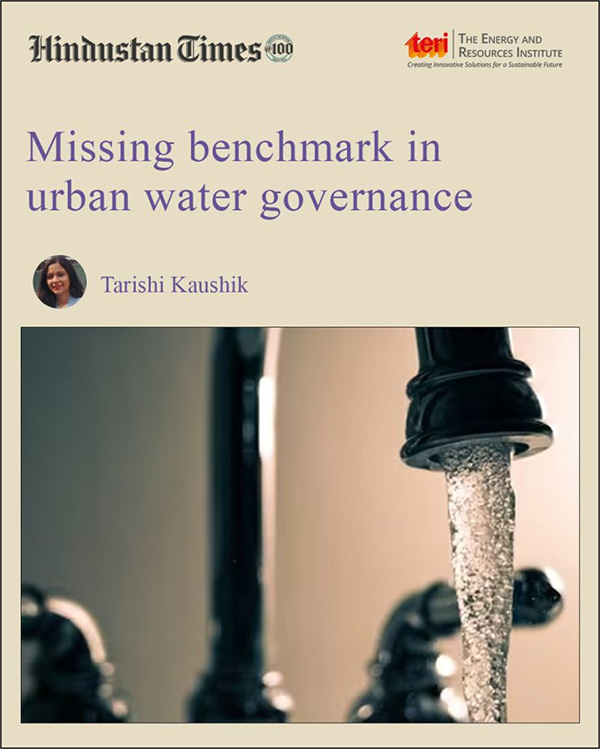
The article highlights a critical gap in India's urban water governance, the absence of benchmarks for construction-stage water consumption. It argues that while buildings and infrastructure consume large volumes of water during construction, there are no standardized guidelines to measure, monitor, or regulate this usage. The article calls for the development of national benchmarks, mandatory water monitoring, and greater reuse of treated wastewater to improve water efficiency and support sustainable urban development.
 |
|
| |
|
| |
|
 |
|
Sustainable Buildings, TERI
Core 1B, Third Floor
India Habitat Centre, Lodhi Road
New Delhi - 110003
Email: sbmail@teri.res.in
Tel: 011-24339606, 011-46444500
|
 |
|
|
|
|