|
| |
FROM CODE TO CAPACITY: BEE–TERI ECSBC MASTER TRAINER PROGRAMME EXPANDS NATIONAL REACH |
|
|
|
|
|
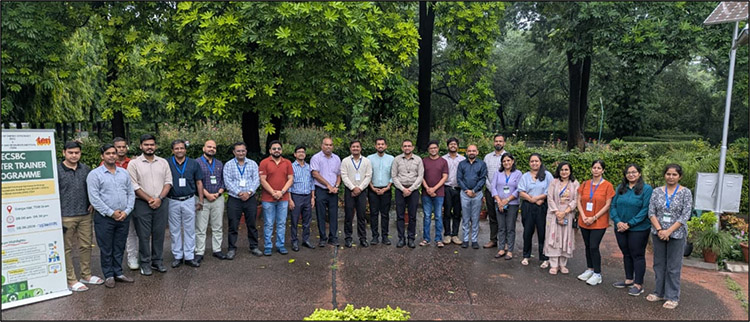
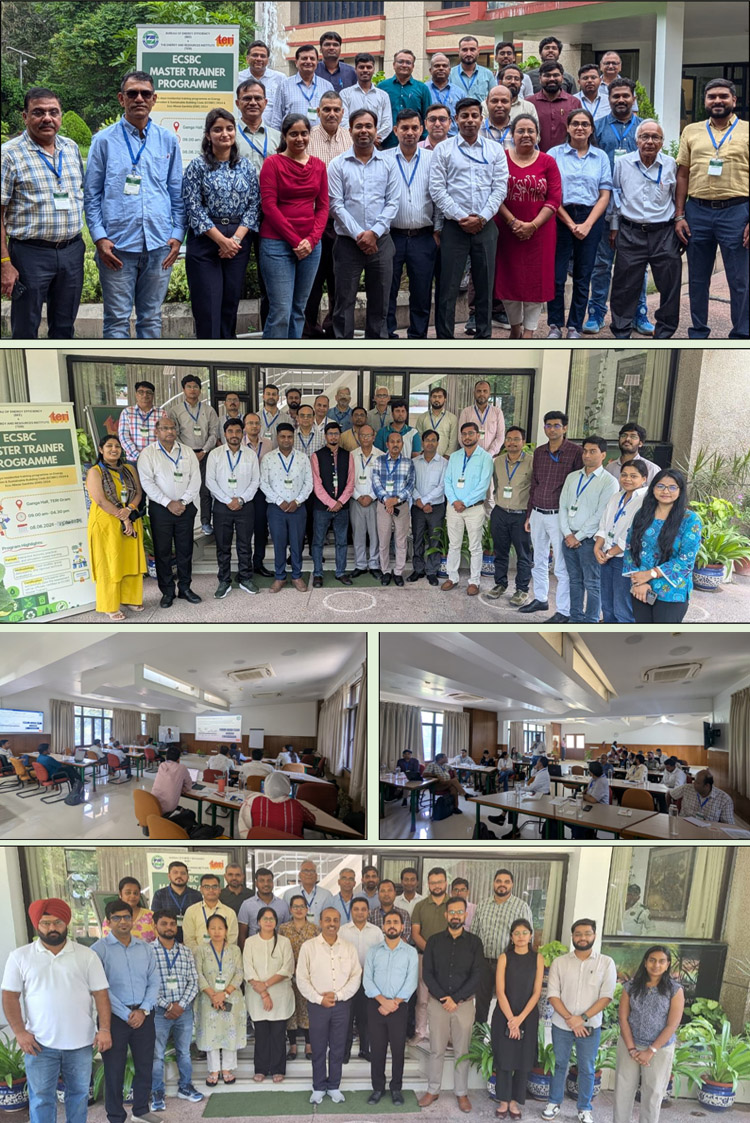
The Bureau of Energy Efficiency (BEE), Ministry of Power, Government of India, in collaboration with TERI, successfully completed Batches 6 to 11 of the Energy Conservation and Sustainable Building Code (ECSBC) Master Trainer Programme at TERI Gram, Gurugram, from 3 August to 25 September 2026, following the successful completion of the first five batches.
The five-day residential programme is a flagship capacity-building initiative aimed at creating a nationwide pool of qualified Master Trainers to support the implementation of the Energy Conservation and Sustainable Building Code (ECSBC) 2024 and Eco Niwas Samhita (ENS) 2024.
Across these batches, the programme brought together architects, engineers, energy professionals, consultants, government officials, academicians, researchers and sustainability practitioners from across India, creating a diverse platform for knowledge exchange and collaborative learning.
The training covered key aspects of energy-efficient and sustainable buildings, including building envelope, HVAC systems, lighting, water and waste management, renewable energy and code compliance. Through technical sessions, discussions, assessments and practical learning, the programme aims to equip Master Trainers with the knowledge and skills required to further support the adoption and implementation of ECSBC 2024 and ENS 2024 across the country.
With the completion of Batches 6–11, the BEE–TERI initiative continues to strengthen the national capacity required to advance energy-efficient, sustainable and climate-responsive buildings across India.
|
|
|
| |
| |
ADVANCING SMART SURFACES FOR CLIMATE-RESILIENT CITIES: TERI CONDUCTS BCAT TRAINING IN BHOPAL |
|
|
|
|
|
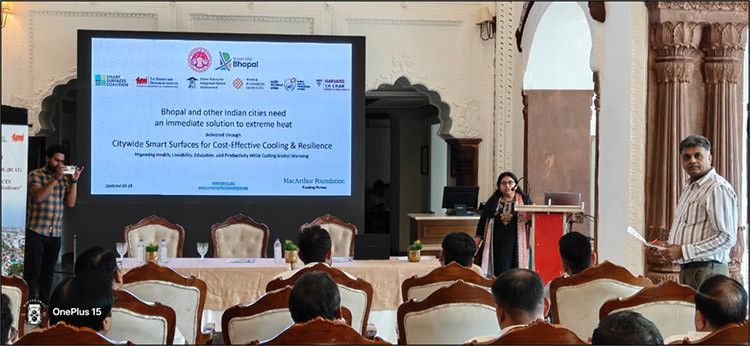
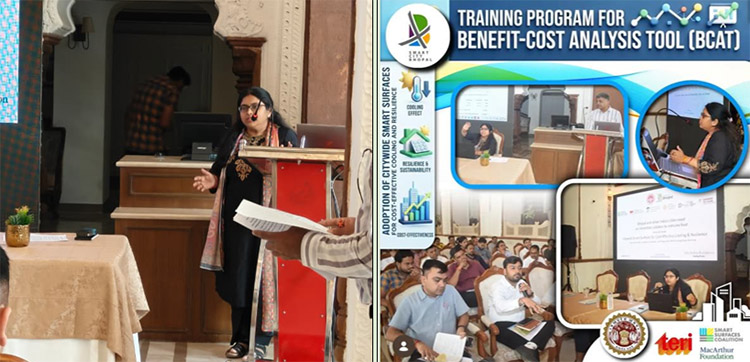
TERI, in partnership with the Smart Surfaces Coalition (SSC) and the Bhopal Smart City Development Corporation Limited (BSCDCL), conducted a technical training programme on the Benefit-Cost Analysis Tool (BCAT) for the Adoption of Citywide Smart Surfaces for Cost-Effective Cooling and Resilience on 28 September 2026 at Sadar Manzil, Bhopal.
The programme built on the citywide Smart Surfaces assessment for Bhopal, launched by TERI and its partners on World Environment Day 2026, which provides a foundation for advancing integrated cooling and resilience interventions across the city.
The training brought together government officials and technical professionals to develop a practical understanding of the BCAT tool and its application in assessing and prioritising smart surface interventions. The programme commenced with opening remarks by Mr. Yatin Choudhary, TERI, followed by an address by Ms. Anju Arun Kumar, IAS, CEO, Bhopal Smart City Development Corporation Limited (BSCDCL).
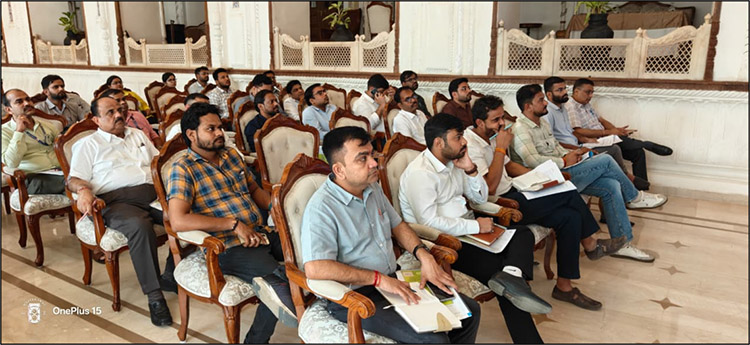
The technical session provided participants with an overview of the BCAT architecture, followed by live demonstrations of city-level and sub-city applications, hands-on exercises, economic analysis and investment prioritisation. The training also explored recommendations for incorporating smart surface interventions into Schedules of Rates (SOR) and Standard Operating Procedures (SOPs), along with relevant case studies and examples.
The programme concluded with an interactive discussion and Q&A, providing an opportunity for participants to discuss the practical application of the tool and its potential role in supporting cost-effective cooling, urban resilience and informed investment decisions.
Through this initiative, TERI and its partners continue to support the integration of data-driven decision-making and economically informed climate interventions into urban planning, helping cities identify and prioritise solutions that can contribute to more resilient and climate-responsive urban environment.
|
|
|
|
| |
| |
FROM ASSESSMENT TO ACTION: ADVANCING GREEN PRACTICES IN AFFORDABLE HOMES IN KARNATAKA |
|
|
|
|
|
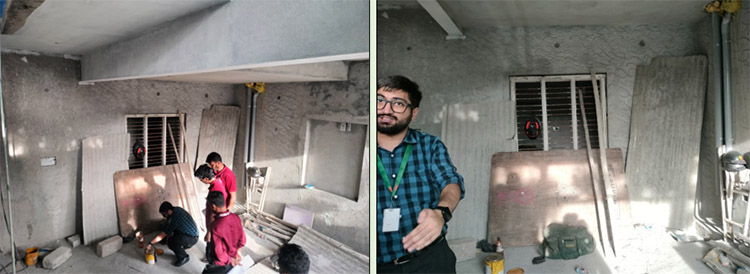
As part of the ADB-supported initiative on green certification of self-constructed affordable housing, a field assessment was undertaken in Karnataka to evaluate household-level opportunities for improving environmental performance.
The assessment focused on understanding the construction stage and existing conditions of individual homes and identifying practical, affordable interventions aligned with green building principles. Key areas included passive design, daylight and ventilation, energy efficiency, renewable energy, water efficiency, sustainable materials and waste management. A notable field observation was the significantly higher uptake of green measures compared to northern regions, with several homes already equipped with solar panels or solar water heaters and the use of China mosaic tiles for improved roof performance.
Link: https://youtu.be/s4daYtT1cAo
|
|
| |
| |
ADVANCING NEAR-ZERO CARBON RESIDENTIAL BUILDINGS: TERI PARTICIPATES IN EXPERT ROUNDTABLE |
|
|
|
|
|
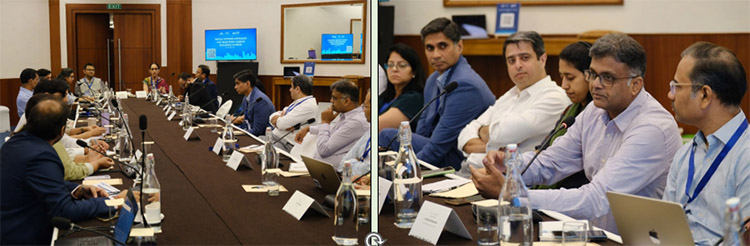
What would enable investors, developers and homebuyers to adopt near-zero carbon residential buildings (NZCBs) at speed and scale, while creating value and effectively managing risk?
This question shaped an expert roundtable convened by RMI India Foundation, in partnership with the National Institute of Urban Affairs (NIUA), bringing together development finance institutions, rating bodies, government-linked institutions, think tanks and other stakeholders from across the ecosystem. Mr. Yatin Choudhary from TERI participated in the roundtable, contributing to the discussions on pathways for mainstreaming NZCBs in India.
The discussion explored the key enablers required to accelerate adoption, with a focus on finance, monitoring and verification, governance, and the development of a common framework and taxonomy.
Key areas of convergence included:
- Finance: Finance was identified as a key enabler across the value chain, particularly in addressing incremental costs and creating value for participating stakeholders.
- Monitoring, Reporting and Verification (MRV): Strong governance, local institutional capacity and credible MRV databases were recognised as important for implementation and evidence-building.
- Framework and Taxonomy: A unified framework for defining NZCBs can provide a common reference point for stakeholders, help align financing approaches, and reduce perceived financial and technical risks.
The discussion highlighted a potential pathway to scale, where a common framework could provide greater clarity and confidence to financial institutions and market participants. Initial pilots and application across lending portfolios could subsequently generate evidence, help de-risk investments and strengthen market confidence.
The roundtable reinforced the importance of collaborative action across finance, policy, industry and technical stakeholders to accelerate the mainstreaming of near-zero carbon residential buildings in India.
|
|
| |
| |
PARTICIPATION IN NATIONAL HOUSING BANK’S SPEECH CONCLAVE ON “PROBITY FOR PROSPERITY” |
|
|
|
|
|
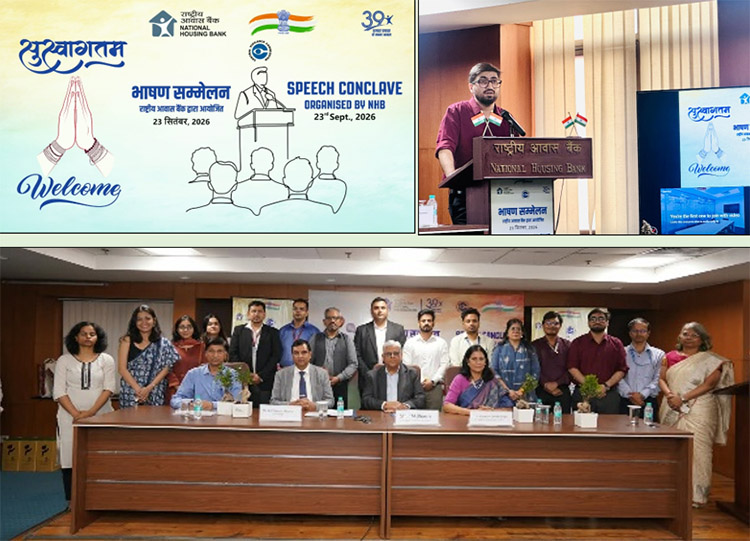
Mr. Vishesh Arora, Area Convenor – Sustainable Buildings Division, TERI, participated in the National Housing Bank’s Speech Conclave on “Probity for Prosperity”. Drawing from TERI’s work under the ADB supported initiative on green certification of self-constructed affordable homes, the speech highlighted the importance of translating green finance into measurable outcomes on the ground.
The intervention emphasised a simple, transparent sequence - identify, assess, recommend, implement, verify and report - supported by digital documentation and evidence-based verification. It also highlighted accessible outreach through community level SAMVAD sessions, brochures and short videos, helping households understand and adopt practical green interventions while ensuring that outcomes are measurable and verifiable.
|
|
| |
| |
SITE VISIT TO KRISALA HIRANANDANI TOWNSHIP: STRENGTHENING SUSTAINABILITY DURING THE CONSTRUCTION PHASE |
|
|
|
|
|
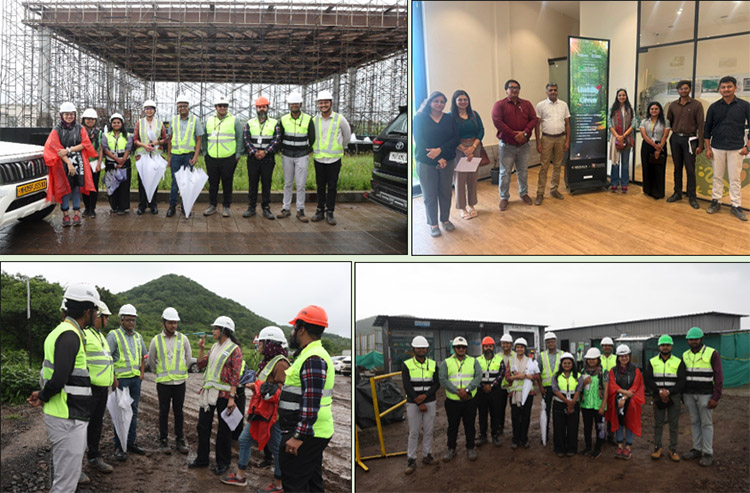
TERI undertook a site visit to the Krisala Hiranandani Township, Pune, on 11–12 August 2026 to review sustainable construction and environmental management practices and assess progress on recommendations from the previous assessment.
The team inspected key township areas, with a focus on construction management, green practices, AQI monitoring, dust control, housekeeping and compliance with the During Construction Phase Checklist.
A technical discussion with the Krisala and VKE teams reviewed identified gaps and corrective measures. A capacity-building session for site engineers and workers was also conducted on sustainable construction practices and effective implementation of environmental measures. The team further visited the Live Lab at the Sales Office to discuss opportunities to strengthen its objectives and contribution to the township’s sustainability goals.
The visit concluded with discussions on priority actions and an improvement roadmap to strengthen the township’s sustainability performance.
|
|
| |
|
 |
|
Sustainable Buildings, TERI
Core 1B, Third Floor
India Habitat Centre, Lodhi Road
New Delhi - 110003
E-mail: sbmail@teri.res.in
Tel: 011-24339606-08, 011-46444500
|
 |
|
|
|
|